How to Evaluate SEO APIs Before Buying
Does this sound like you?
You’re on the market selecting SEO APIs and have narrowed down your options to a few solutions.
The pricing looks reasonable. The documentation seems complete. But something feels off. You can't identify which one actually fits your SEO needs, security requirements, and long-term strategy.
Besides inaccurate keyword data, working with the wrong API can slow down your engineering teams or complicate security and compliance reviews. Worse still, it may lead to expensive re-platforming six or twelve months down the line
With this guide, we highlight the key elements to consider when selecting the right SEO API for your needs.
Why Choosing an SEO API Is Now a Strategic Infrastructure Decision
Gone are the days when data lived in dashboards. Today, enterprise search data feeds far beyond marketing:
Business intelligence platforms use organic search data to show revenue trends
AI and machine learning models rely on large-scale keyword and SERP datasets for training and prediction
Forecasting and planning systems integrate search demand signals alongside paid media, sales, and inventory data
This means that the API will not be used by the marketing team alone. It becomes a data infrastructure that multiple departments depend on, which must maintain uptime guarantees.
This is why more teams are switching from UI-first SEO tools to API-driven platforms designed for enterprise search data workflows.
API-first SEO platforms are built for enterprise-scale data workflows. These platforms can expose structured search data via an API. This makes them ideal solutions for large engineering, analytics, and AI teams that want to integrate SEO signals directly into critical business systems.
Define Your SEO Data Use Cases Before Comparing Vendors
Avoid evaluating APIs backwards. This can include vendor demos, comparing pricing tiers, and then trying to match their actual needs with what the platform offers.
Start, instead, by documenting your core data use cases specifically, the workflows that require automation, scale, and consistency. Here's what you look for in an SEO API for an enterprise team:
Priority of Large-scale keyword discovery.
A solution for continuous SERP monitoring.
A platform that automatically uncovers competitor SERP presence, traffic estimates, and backlink data at market scale.
You want to stream fresh SEO data directly into BI tools like Looker or Tableau to power always-up-to-date, decision-ready reporting.
Core SEO API Comparison Criteria
Choosing an SEO API means selecting the data foundation for your SEO efforts, not just a tool. Let’s look at the key points to consider:
1. Consider Data Coverage and Freshness
Data coverage ensures the API can answer all your SEO questions, while freshness ensures the data is still relevant when you use it.
For data coverage, here’s what to look out for:
The breadth of keyword and SERP data first
Geographic and language coverage
Depth of SERP results
The frequency of data updates
Bishopi API, for example, exposes large, frequently refreshed datasets for enterprise SEO workflows where teams need access to current SERP data in bulk rather than occasional manual lookups.
You can use SERP API to view your keyword rankings, competitor analysis, and keyword opportunities in real time so you can optimize your content strategy accordingly.
2. API Architecture and Scalability
Your API might work fine for a few hundred requests a day, but can it handle the volume your production system generates? What happens when it can’t handle?
Consider the following factors:
The API’s ability to handle bulk keyword and SERP requests
Its rate limit flexibility at scale
Asynchronous processing support
Reliability and uptime expectations.
3. Security and Access Control
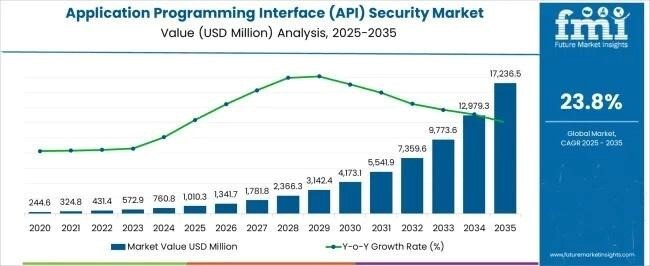
The API security market, valued at $1010.3 million in 2025, is projected to grow to $17,236.5 million by 2035. This is due to the increasing reliance on APIs across different industries and the rising frequency and sophistication of API-related breaches.
When selecting your API, treat security and access control as foundational capabilities, not optional features. This is especially vital when search data integrates with internal systems.
Consider the following aspects to choose a secure SEO API:
API key management
Rate limiting and abuse prevention
Audit logging
Tenant isolation
Role-based access (where applicable)
Lastly, don't expect vendors to volunteer implementation details. But you should be confident that they've designed their platform with these capabilities as foundational, not bolted on.
4. SEO API Compliance and Privacy
Besides API security and access control, you should also treat compliance and privacy as foundational requirements, not optional extras. Emphasize on these elements:
GDPR and enterprise data privacy expectations
Data retention policies
Customer data isolation
Procurement and vendor risk requirements
5. Integration Readiness
Imagine using powerful data sources only to struggle with messy outputs or tools that don’t plug into your existing stack.
You need to choose an API that’s built for integration from day one to prevent costly rework and stalled insights.
When evaluating APIs, ensure you choose one that connects with the systems you currently use. These include:
BI tools like Tableau, Looker, or Power BI that business stakeholders rely on for reporting.
Data warehouses like Snowflake, BigQuery, or Redshift enable you to centralize analytics datasets.
AI pipelines that use SEO data as training inputs for machine learning models.
Custom internal dashboards built in React, Vue, or whatever framework your team prefers.
This requires more than just access. It demands structured, clean, and consistently queryable data. A backlink analysis api can give you this data. For instance, it can consolidate backlink intelligence, competitive link analysis, and domain authority metrics in a single, well-documented endpoint.
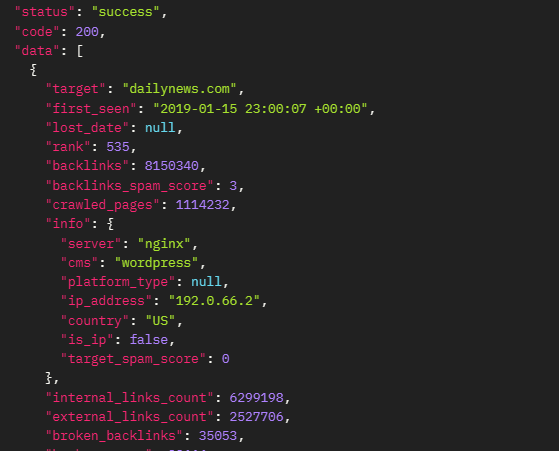
This prevents the integration overhead of managing multiple backlink data sources, which reduces both engineering time and coordination complexity across link-building workflows.
UI-Based SEO Tools vs API-First Platforms
Some of the popular content optimization platforms started as UI tools and added APIs later. API-first platforms follow the opposite architectural design, and that difference shapes everything about how they work.
Here is how they differ:
Structural Differences Between UI-Based Tools and API-First Platforms
UI-based SEO tools optimize for manual exploration. You log in, run queries, explore dashboards, and export reports. APIs exist to support those workflows, not to replace them.
In a UI-based tool, rate limits are conservative because the platform isn’t designed for high-frequency automated access. Besides, data structures prioritize visual presentation over programmatic consumption.
These tools work well for manual keyword analysis but cannot scale as teams grow, markets expand, and automation becomes essential.
They also have limitations of manual exports and fixed workflows. When your SEO data needs to be updated in real-time, scale across thousands of keywords, and integrate with systems that expect fresh data on demand, exporting CSVs and uploading them manually doesn't work.
On the other hand, API-driven SEO platforms take a different approach.
These platforms are optimized for programmatic access. The UI, if one exists, is a thin layer on top of the same API your code calls. Rate limits are flexible because the platform expects high-volume automated usage.
Furthermore, data structures are clean and consistent because the primary consumer is code, not people.
Why APIs are Better Suited for Large Teams, Multiple Markets, and Automation
API-first SEO platforms are better suited for large teams, multiple markets, and automation. This is because they allow teams to access data programmatically, standardize, and scale it across systems without manual effort.
Unlike UI-based tools that create bottlenecks around logins, exports, and human workflows, APIs feed data directly into dashboards, data warehouses, and AI pipelines in real time.
For instance, platforms like Bishopi are built with a suite of REST APIs that deliver SEO data programmatically rather than locking valuable insights behind manual dashboards.
SEO professionals can integrate real-time search metrics directly into workflows, data warehouses, dashboards, or automation scripts.
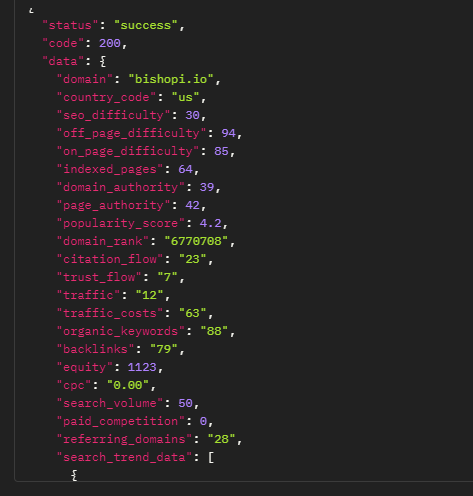
For example, a domain SEO analysis tool can retrieve comprehensive technical SEO insights through both UI and API, but the architecture prioritizes programmatic access.
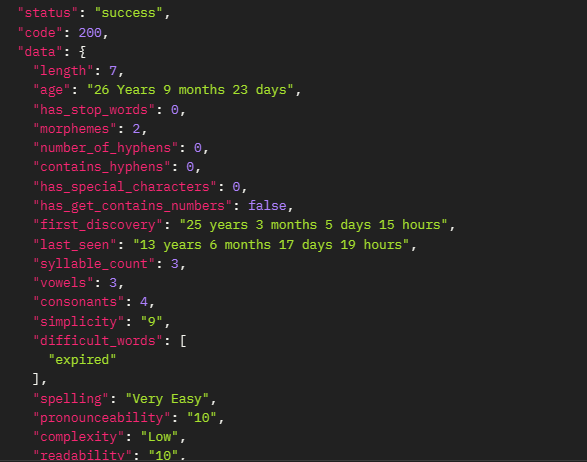
You can also automate technical audits across hundreds of domains, feeding results directly into alerting systems that flag issues requiring attention.
Questions Engineering and Security Teams Will Ask
Engineering and security stakeholders will evaluate the API decisions through a different lens than marketing teams. Here's the internal checklist they will be working from. You should have clear answers to the following questions before the conversation starts:
How are rate limits enforced?
What happens during traffic spikes?
How is customer data isolated?
Are audit logs available?
Is uptime SLA-backed?
Total Cost of SEO API Ownership (Beyond Pricing)
The line item on your invoice is the smallest part of what an API actually costs. Beyond pricing, the true cost for owning an SEO API includes:
The time the engineering team spends building connectors, transforming data, handling errors, and, ongoing maintenance.
Maintenance overhead.
Data reconciliation.
Tool sprawl.
Opportunity cost.
When you're comparing API pricing, factor in these operational costs. For instance, a platform that costs 30% more but requires half the engineering time and produces reliable data might be cheaper in total cost of ownership.
Common Mistakes Teams Make When Choosing an SEO API
Choosing the wrong solution can quietly derail your growth, waste your time, budget, and momentum before you realize what’s gone wrong. Here are costly mistakes you must avoid so you can choose a solution that supports your long-term SEO strategy.
Choosing based on UI demos instead of data architecture.
Ignoring security and compliance early.
Underestimating future scale.
Overlooking data freshness and reliability.
What a Good SEO API Decision Looks Like in 2026
In 2026, smart teams must prioritize working with systems that detect opportunities automatically, surface actionable insights in real-time, and feed data into the same business intelligence platforms that track revenue, customer acquisition, and SEO performance.
Here is what a good API should be:
It delivers real-time SEO insights
It automates opportunity detection and SEO reporting
Search data feeds revenue and forecasting systems
Most latest enterprise SEO API platforms like Bishopi fit this 2026-ready model. This is because they support automation, real-time insight delivery, and seamless integration with modern data stacks.
Evaluate SEO APIs With the Future in Mind
The SEO API you choose should fit into your SEO goals without any complications. Treat the decision as selecting data infrastructure, not just an SEO tool. The right platform should deliver broad, frequently refreshed data, scale reliably as usage grows, meet security and compliance requirements, and integrate cleanly into your existing workflows.
An API-first platforms like Bishopi SEO API stand out. Built for enterprise search data workflows, Bishopi provides high-throughput access to structured keyword data, real-time SERP signals, and competitive visibility metrics.
Its integration-ready architecture makes it easy to feed reliable SEO data directly into dashboards, data warehouses, and automation pipelines. Explore the Bishopi SEO API Architecture today.
Frequently Asked Questions
What should I look for when choosing an SEO API in 2026?
When selecting APIs for search engine optimization, evaluate the platform as a data structure, not a marketing tool. Prioritize data coverage, freshness, scalability, and integration readiness over UI features or demos.
Why are API-first SEO platforms better than UI-based SEO tools for enterprises?
API-driven platforms are built for automation, high-volume access and system-to-system integration. They also offer flexible rate limits, clean data structures and better scalability for large teams and multiple markets. On the other hand, UI-based tools are optimized for manual SEO analysis and cannot scale.
How do security and compliance impact SEO API selection?
Security and compliance determine whether an SEO API can safely handle sensitive data like keywords, URLs, and user information. APIs that are built with adherence to standards like SOC 2, GDPR, ISO 27001 reduce legal and operational risks.
Originally published at: bishopi.io
Stay up to date
Get updated with all the news, update and upcoming features.