When picking the perfect domain name for your website, you want something unique, memorable, and relatable to your brand. But, with over 600 million registered domains worldwide, the name you want may already be taken. Luckily, you can search all the desired domains using this tool
The process of going from one name to the other can be overwhelming. Fortunately, great domain name tools simplify the search. These tools help you brainstorm ideas, check availability, and ensure your dream domain is SEO-friendly. In this guide, we’ll explore the best domain name tools and their features to help you secure a name that stands out.
What is the Importance of Choosing the Right Domain Name?
A domain name is your online identity, brand, and first impression. A good domain name instantly makes your business look professional and trustworthy. On the other hand, a poorly chosen domain can make your business appear unprofessional or untrustworthy. Here are some reasons why you must choose your domain carefully.
Recognition
A great domain name reinforces your brand identity. It should align with your business name, values, and niche. For example, if you’re running an influencer marketing agency, a domain like “brandfluence.com” immediately communicates your focus. But, with a domain name like “blueskysolutions.com,” people can’t tell if it's related to an influencer marketing agency. It sounds generic and more like a tech consulting firm.
Search Engine Optimization (SEO)
Exact match domains (EMDs) aren’t as critical for SEO as they once were. However, a domain name with relevant keywords can still boost your search engine rankings.
For example, a dentist practice in a local area might benefit from a domain like “Orlandosmilecare.com” or “Springfieldfamilydental.com.”
These names are easy to remember, show the location, and highlight the service. This makes them clear and trustworthy for local patients.
Investment Potential
For domain investors, the right domain name can appreciate in value over time. Short, catchy domains like “cars.com” or “insurance.net” are highly sought after and can yield significant returns.
User Trust
A professional domain name builds trust with your audience. Avoid domains with unusual extensions (e.g., .top or .online) or hard-to-spell names, which can raise red flags for users.
A good domain name grows with your business. It should be versatile enough to accommodate future expansions or pivots. For example, using a domain like “technest.com” gives you enough leverage to cover a range of tech-related services, from software development to tech consulting. When picking a domain name, you should always think long-term and only choose scalable domain options.
Features to Look for in a Domain Name Tool
A domain name tool should help you find a name that aligns with your brand, is easy to remember, and has strong SEO potential.
A good domain tool should help you find valuable domains that you can sell for a profit. It should also analyze market trends and help you manage your portfolio easily.
When choosing a domain name tool, look for features that make finding, analyzing, and securing a domain name easy.
The following is a breakdown of attributes to look for in a domain name tool:
- Domain availability checker: The tool should instantly check if a domain name is available across multiple extensions (e.g., .com, .net, .io). If the desired name is taken, it should suggest alternative options.
- Keyword suggestions: The tool should help you identify relevant keywords for your niche or industry. For example, if you’re looking for a tech-related domain, you need keywords like “cloud,” “app,” or “ai.”
- Domain monitor: Sends email notifications every time a domain status changes. It tracks domains nearing expiration, when a domain enters an auction, WHOIS changes, and more.
- Domain valuation: For domain investors, the tool should provide an estimated value of a domain based on length, keywords, and market trends. This helps users identify domains with high resale potential.
- Bulk search and management: The tool should allow bulk domain searches and management for investors or agencies managing multiple domains. This will save time and make it easier to handle large portfolios.
- WHOIS lookup: The tool should provide WHOIS information to check domain ownership details, expiration dates, and registration history. This is especially useful for investors looking to buy expired or premium domains.
- SEO and traffic analysis: The tool should analyze a domain’s SEO potential, including keyword relevance and search volume. It should also show historical traffic data to assess a domain’s value.
- User-friendly interface: The tool should be easy to navigate, even for beginners. Clear instructions, filters, and sorting options make the experience more intuitive.
- Domain history check: The tool should provide information about a domain’s history. This is crucial for avoiding domains with a bad reputation.
- Premium domain marketplace: The tool should offer access to premium domains with high resale or branding value. It should also provide negotiation or auction features.
- Customer support and resources: The tool should provide helpful resources. These include guides, frequently asked questions, and customer support. This will help users make informed decisions.
Top Domain Names for 2025
1. Domainr
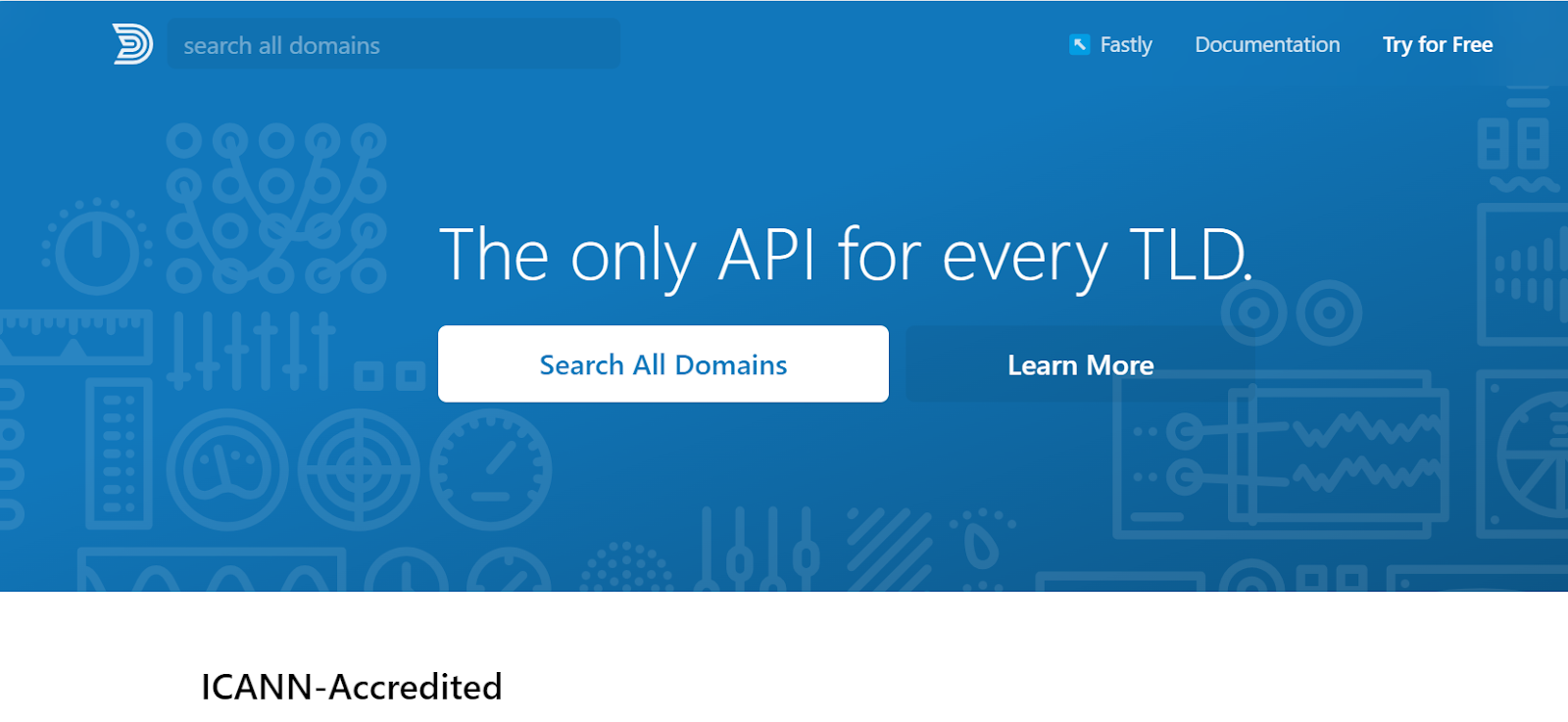
Domainr provides instant results as you type. It shows availability across multiple extensions, such as .com, .io, .co, and .app.
It saves time compared to tools that require a full search submission.
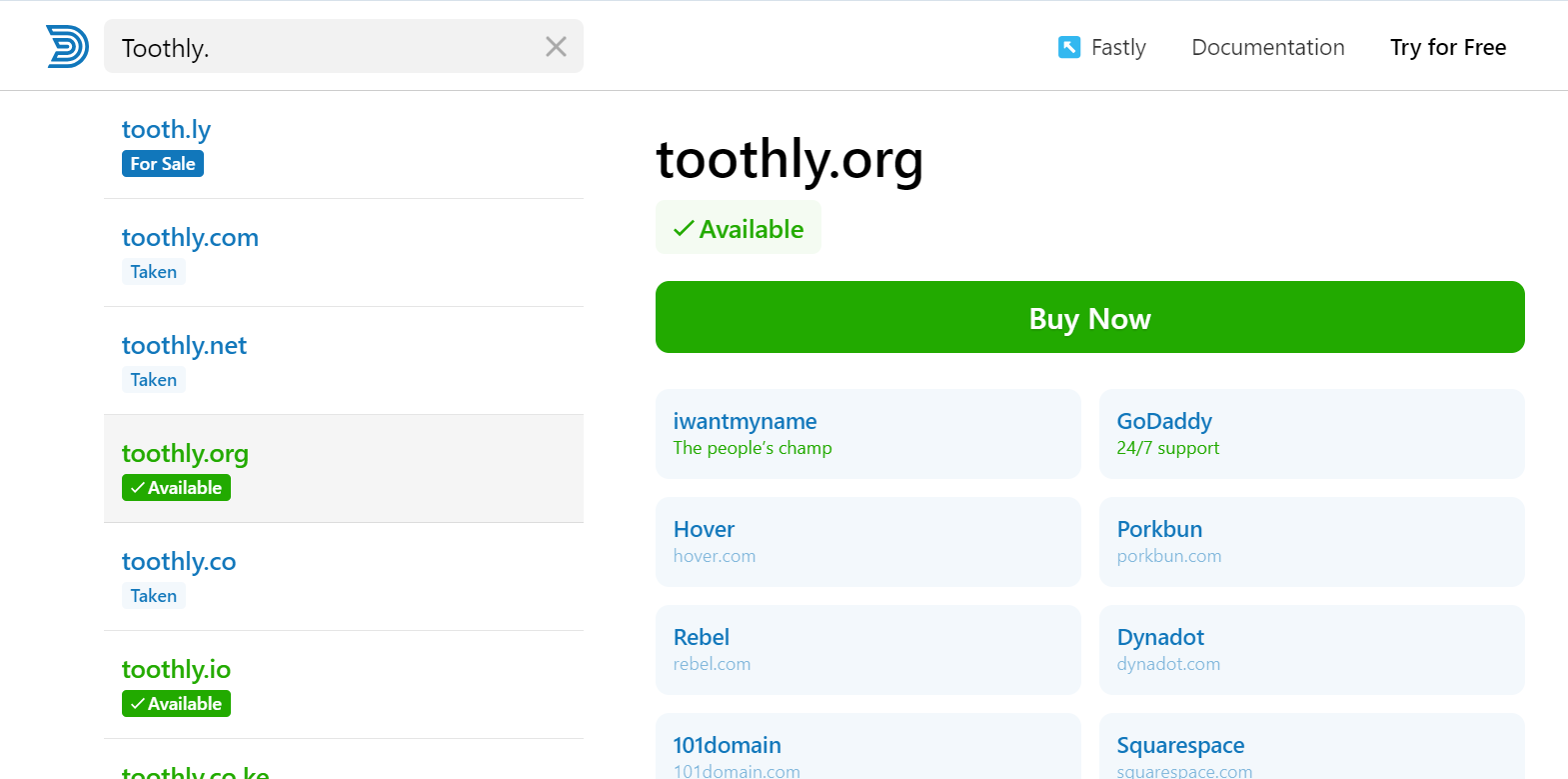
If the desired .com domain is taken, Domainr suggests creative alternatives with newer extensions like .io, .ai, .design, or .tech.
Domainr has a clean, minimalist design that works seamlessly on desktop and mobile devices. This makes it easy for users to search for domains on the go. Once you find a domain you like, Domainr will guide you to popular registrars. These include GoDaddy, Squarespace, and Dreamhost, where you can complete your purchase. Domainr’s real-time search results make it one of the fastest tools for finding available domains.
With Domainr, you can find out if the domain you want is already registered and whether it’s up for sale. This feature is very helpful if you want premium or already-taken domains. It saves time by showing if a purchase opportunity is available.
Bishopi offers similar APIs that deliver real-time domain sales checker api and for-sale status data. This makes it easier to build custom tools or workflows with correct domain market insights.
2. Bishopi
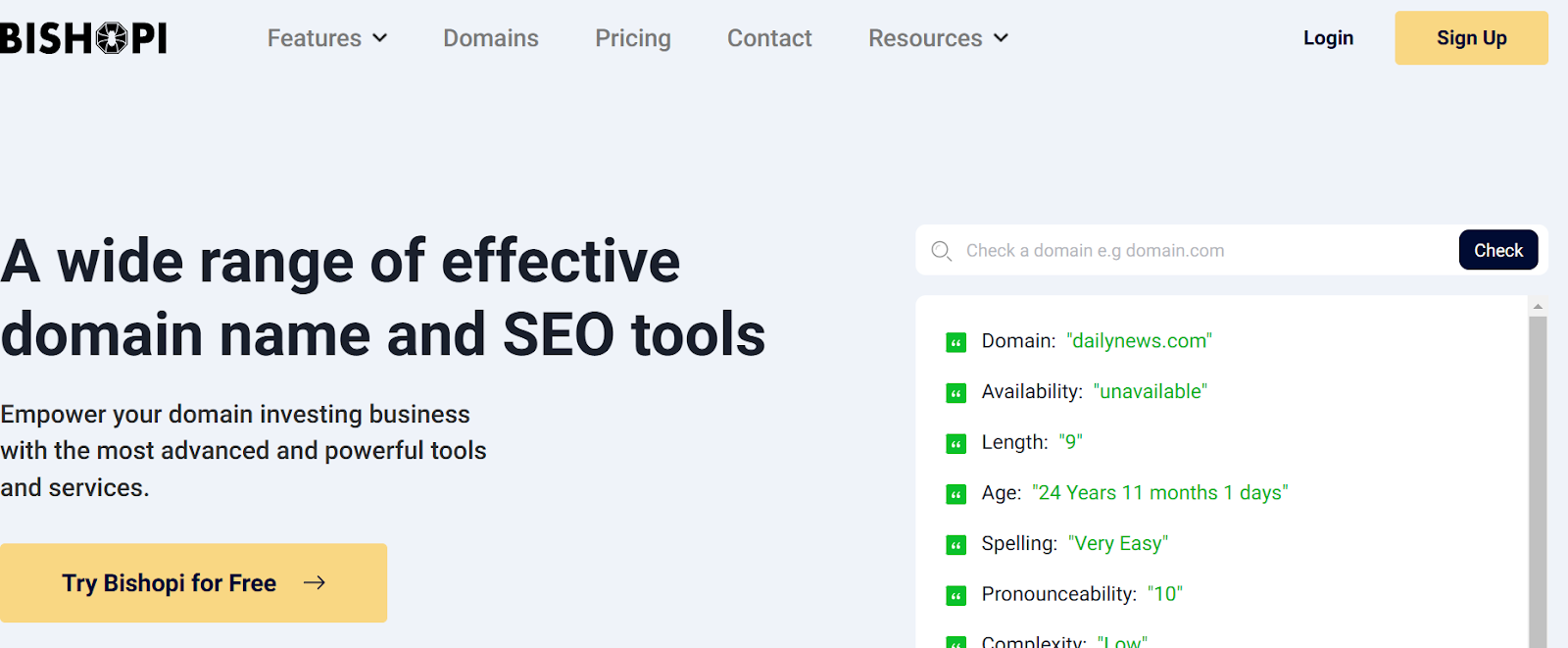
Bishopi allows you to search for domains using keywords, phrases, or specific criteria. It provides instant availability checks across multiple extensions like .com, .io, .net, and more.
The tool uses AI to generate unique, brandable domain names tailored to your industry. The AI-generated suggestions help discover unique, memorable domain names you might not have thought of.
Bishopi offers a built-in domain valuation feature that estimates a domain's potential resale value. The tool analyzes a domain's SEO potential, including keyword relevance, search volume, and competition.
You can search for multiple domains at once if you’re a domain investor managing a large portfolio. By signing up, you gain access to a selection of premium domains with high branding value. You can also browse domains that are already registered but available for purchase. Bishopi makes it easier to buy and sell domain names as investments. They offer insights and information. You can also pre-purchase or back-order domains. It also provides optional insights into users' brand statistics and SEO metrics. This helps businesses and investors make informed decisions based on data.
The platform provides WHOIS information, including domain ownership details and expiration dates. It also looks at a domain’s history. This checks if someone has used it for spam and search engines haven’t banned it. Bishopi has a user-friendly design that’s easy to navigate, even for beginners. Once you find a domain you like, Bishopi facilitates seamless purchasing.
You can ask for a domain that is already registered but may be available soon. You can do this through Bishopi’s back-ordering service. This increases your chances of securing high-value domains.
Bishopi provides a complete set of APIs for digital marketing and analysis. This helps you stay ahead in the digital marketing game.
Bishopi offers availability checks, name suggestions, free domains checks, SEO analysis, and investment insights all in one platform. This means you don’t have to switch between different tools.
3. Expired Domains
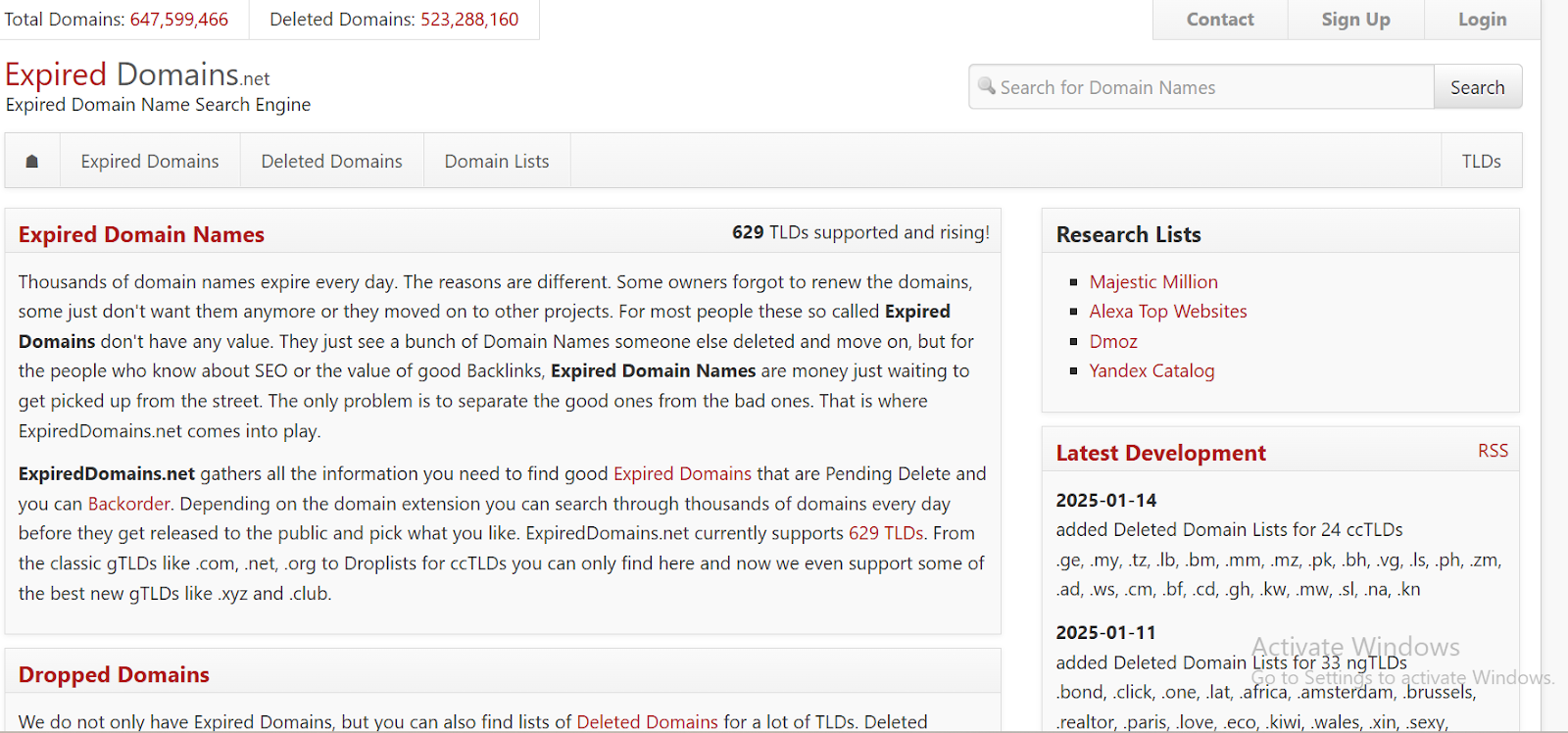
Expired Domains compiles data from multiple sources to provide users with a comprehensive list of available domains to explore.
It has a massive database of expired, dropped, and soon-to-expire domains. Users can filter domains by extension, keywords, backlinks, and more.
If a domain is available, Expired Domains links directly to domain registrars like Namecheap, GoDaddy, and Name.com for easy registration.
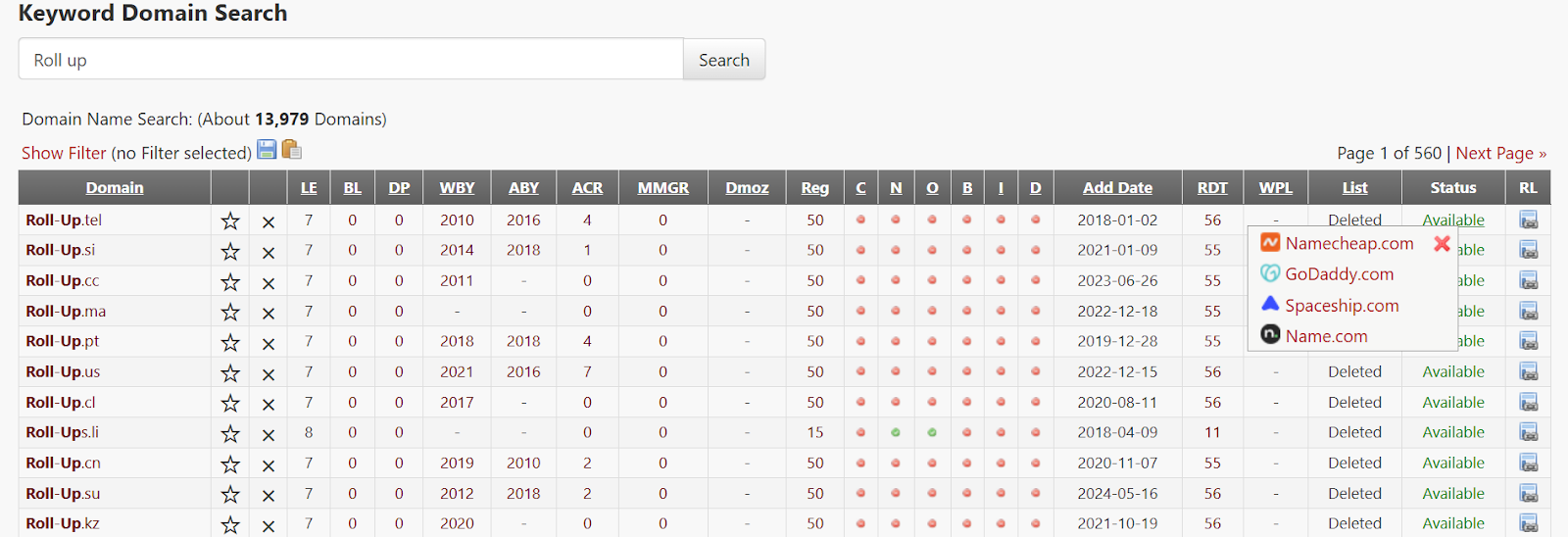
Expired Domains allows users to create watchlists to track specific domains and receive notifications when they become available.
The platform does not have a built-in domain valuation feature. You’ll need to use external tools for pricing insights.
The tool is free, but you must create an account to access all the data.
4. Whois DomainTools
Whois Domaintools provides detailed WHOIS information, including domain ownership, registration dates, expiration dates, and registrar details. The tool offers a historical snapshot of a website domain, including past ownership, website content, and all past changes. This tool is helpful in investigating a domain's background and identifying potential red flags.
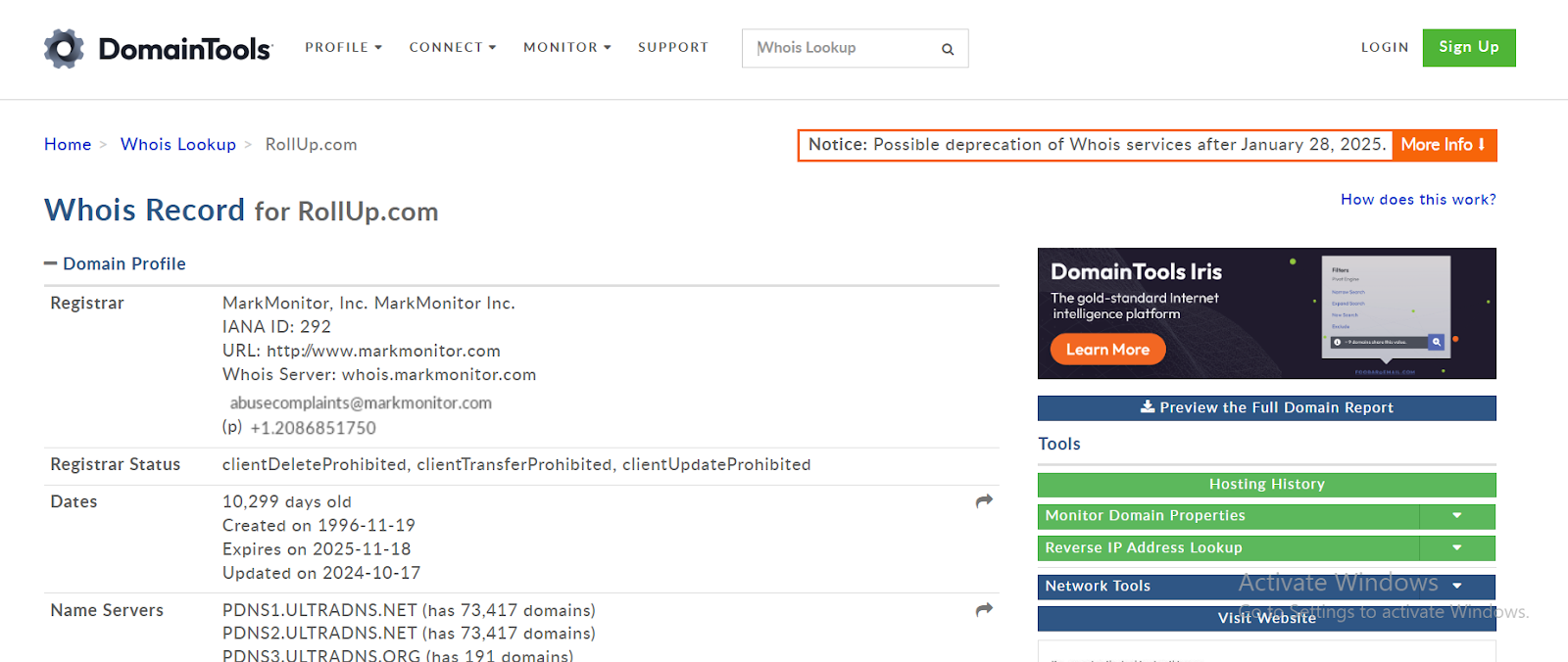
You can use it for domain monitoring to stay updated on all the domains you’re interested in. It can also help with malware detection to identify potentially risky domains.
Whois Domaintools doesn’t generate domain name suggestions or check availability.
5.MX Toolbox
MX Toolbox helps users troubleshoot DNS configuration issues and ensure proper domain setup.
It has tools to test email deliverability, check blacklist status, and verify SPF, DKIM, and DMARC records.

The platform also diagnoses email delivery problems and improves the sender's reputation.
If you need a one-stop solution for diagnosing DNS, email, and network issues, MX Toolbox will save you time and effort.
6. Namebio
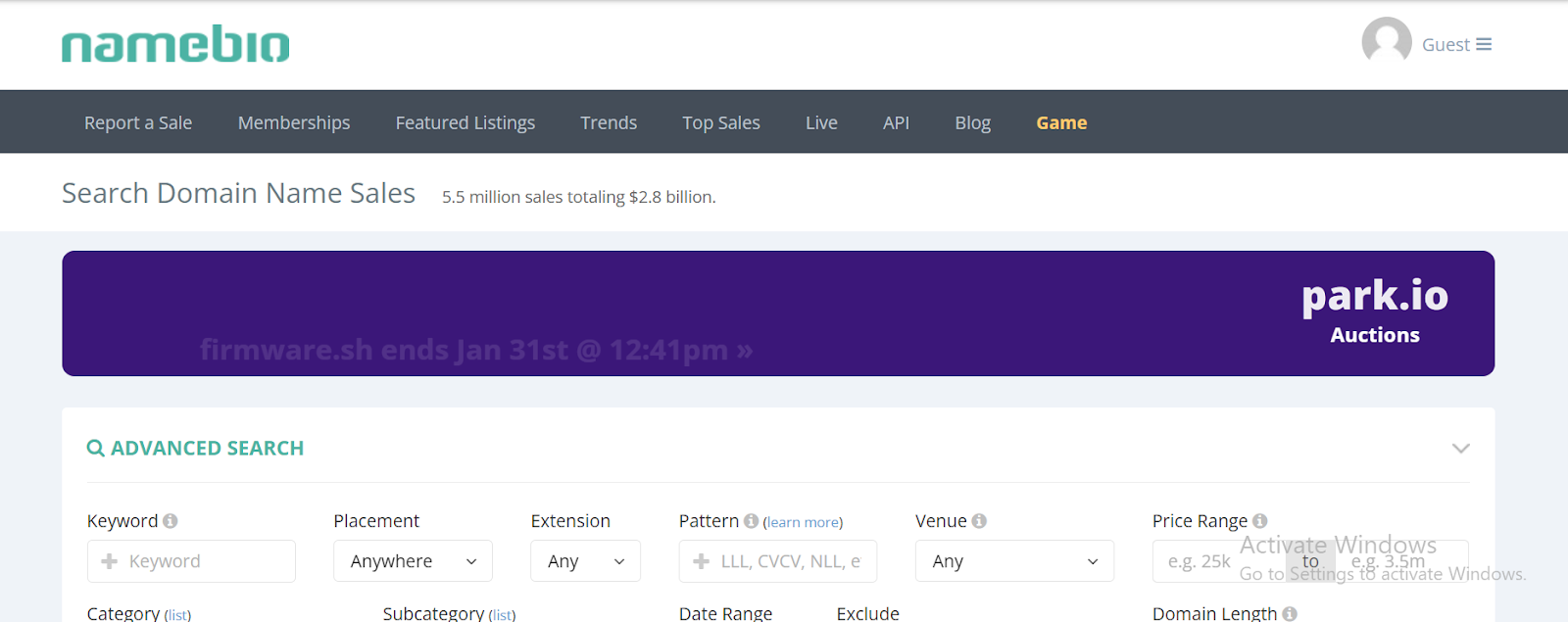
Namebio has a comprehensive database of historical domain sales, including sale price, date and extension. Users can filter domain sales by keyword, length, extension, price range, and sale date.The tool provides insights into market trends. It shows the top-selling extensions, average sale prices, and popular keywords. It’ll help you understand what types of domains are in demand. Bishopi also offers an extensive domain sales history database that you can use advance filters to value your domain name.
How to Choose the Perfect Domain Name
The tools we’ve covered are a great place to start when picking a domain name. They can help you check availability and generate creative ideas. Some more advanced tools, like Bishopi, can even analyze a domain's potential value. These tools eliminate guesswork and help avoid making common mistakes.
Here are tips to help you choose the perfect domain name:
- Keep it short: A concise domain name is easier to remember and type. Avoid long or complicated words that may confuse users.
- Use the right extension: .com remains the most popular TLD. You can also consider alternatives like .io, .tech, or country-specific extensions if they suit your brand.
- No numbers and hyphens: Numbers and hyphens make your domain harder to type and remember. Stick to words and phrases.
- Consider branding: Your domain name should reflect your brand identity. Choose a unique name that aligns with your business values and is easy to market.
- Think long-term: Pick a name that allows your business to grow and expand. Avoid overly specific names that could limit your scope later. For example, if you start with a domain like “jollycupcakes.com” but later expand into catering or other desserts, the name might feel too narrow. Instead, opt for something broader like “jollytreats.com,” which leaves room for future growth.
With tools like Bishopi, you can simplify the process by generating creative, SEO friendly domain names while checking their availability.
Claim Your Ideal Domain Name
The best domain name resonates with your audience, reflects your brand, and sets you up for long-term success. A good domain name tool makes the process easier. It helps you check if a name is available. It also analyzes brand potential and lets you explore more options. Bishopi doesn't just give you a list of available domains. To find a short and catchy name that fits your niche, the tool gives you many options. You can keep searching until you find the perfect one.
Sign up for a free trial of Bishopi and unlock its powerful features today.
Frequently Asked Questions
What benefits do domain tools provide?
Domain tools offer several key benefits:
- Efficiency: You can quickly check domain availability across multiple extensions (.com, .io, .ai, etc.) in real-time.
- Market insights: Using them, you can identify premium domains, assess their value, and determine if they’re for sale.
- Creative suggestions: You can generate alternative domain ideas if your desired name is taken.
- Time-saving: Automate repetitive tasks like bulk searches or monitoring domain expiration.
- Integration: APIs (like Bishopi) allow developers to build custom tools for domain research and management.
- Cost-effective: Help avoid overpaying by helping you to choose an annual price comparison and historical sales data.
What is the purpose of registering a domain name?
Domain name registration secures your unique spot on the internet. It ensures that no one else can use the same name. It protects your brand and gives you full control over your online presence. When you register your domain, you prevent competitors or malicious actors from claiming it. A registered domain also allows you to create a professional email address.
Which domain name is best?
The best domain name is:
- Easy to type, spell, and remember.
- Unique and reflective of your business or niche.
- Flexible to grow with your business.
- Uses a reputable extension like .com, .net, .io, or .org.
Do you require domain name tools to start with domain flipping?
Not necessarily. But, domain name tools will make your domain flipping more convenient. Domain tools can help you research trending keywords and market demand. They also provide insights into a domain’s potential resale value. And your access to real-time data and for-sale domains gives you an advantage in a competitive market. If you’re a beginner in domain flipping, domain tools also give you guidance on how to get started.
Originally published at: www.bishopi.io
Get updated with all the news, update and upcoming features.