The Best SEMrush Alternatives in 2026
There's no doubt about it: SEMrush is one of the leading tools in SEO, and for a good reason.
But that doesn’t automatically make it the right fit for you.
There are several reasons you might start looking for a SEMrush alternative:
Pricing is not justified as usage scales
API access is limited for programmatic workflows
Data freshness and crawl depth don't always match specialized tools
Limited reporting flexibility
The good news is that there are strong SEMrush alternatives, each with its own strengths, data advantages, and ideal use cases.
In this article, we list the 10 best SEMrush alternatives in 2026 with practical highlights and real use cases, so you can find the right fit.
How We Are Evaluating SEMrush Alternatives
Not every tool deserves the same weight on every criterion. Here is the framework we’ve used to assess each SEMrush.
Criteria | What We Looked At |
SEO Data Depth and Freshness | Database size, crawl frequency, data accuracy |
Backlink Intelligence | Index size, link quality signals, anchor text analysis |
Domain and SERP Insights | Authority metrics, SERP feature tracking, competitor visibility |
Automation and API Access | API flexibility, rate limits, integration support |
Ease of Use and Reporting | Learning curve, dashboard clarity, client reporting options |
Pricing Scalability | Cost at growth stages, hidden limits, tier transparency |
In each listing, you’ll find a clear breakdown of what the SEO tool does well and who it’s best suited for.
Tool 1: Ahrefs - Best for Backlink Intelligence
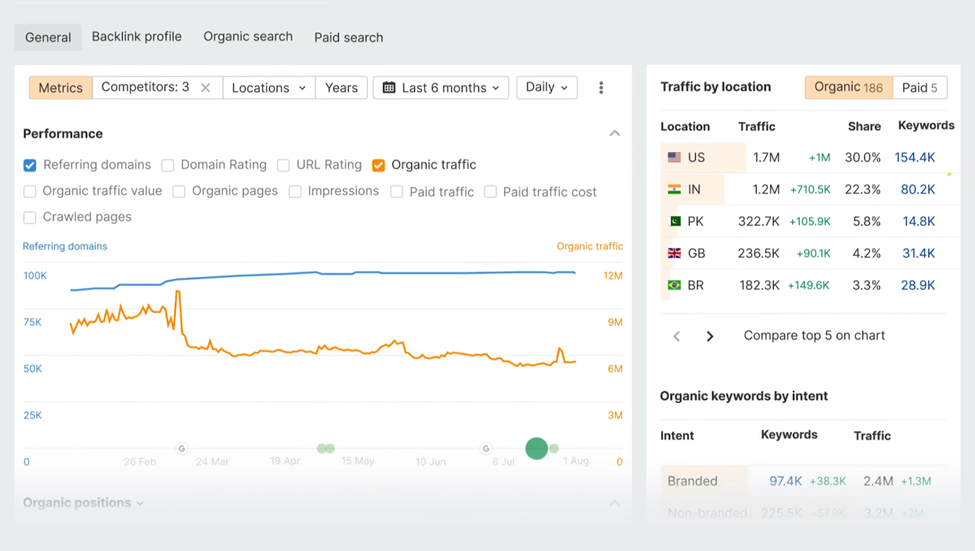
If backlinks are at the center of your SEO strategy, Ahrefs is the tool most people eventually land on. Its index is one of the largest available and its crawl frequency means the data you are working with is actually current.
[Screenshot via Ahrefs]
Strengths
Backlink index depth and update frequency are industry-leading
Competitor keyword gap analysis is reliable and detailed
Content Explorer surfaces high-performing content opportunities at scale
Site Audit covers technical SEO with solid crawl depth
Rank tracking is accurate with strong historical data
Limitations
No free tier, and pricing steps up quickly
API is available, but not the most flexible for custom pipelines and quite expensive
Local SEO features lag behind some competitors
Practical Use Case
You are running a link-building campaign for a client in a competitive niche.
You need to audit their existing backlink profile, identify toxic or low-quality links, find gap opportunities against three direct competitors, and pull anchor text distribution data - all before your next strategy call.
Ahrefs handles that entire workflow without you needing to switch tools.
Pricing Details
$29–$1,000+/month
Custom plans available for enterprises
Tool 2: SE Ranking - Balanced All-In-One Tool
SE Ranking is what you reach for when you need a full toolkit without the full-scale price tag. It handles the core jobs well and does not ask you to sacrifice usability to get there.
[Screenshot via SE Ranking]
Strengths
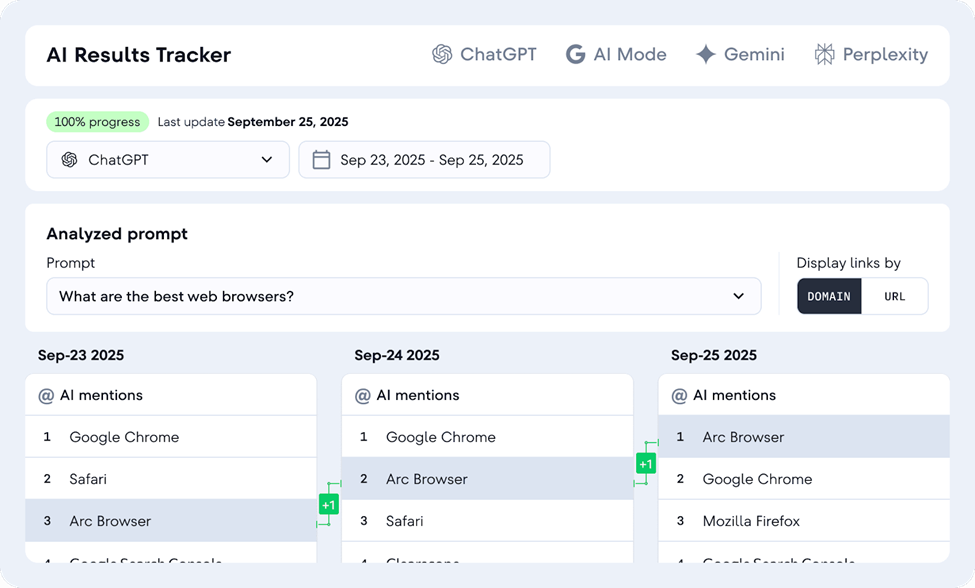
Includes AI results tracker
Keyword research and competitor tools are practical and well-organized
Site audit reports are actionable, not just data dumps
White-label reporting is built in, useful for agencies
Pricing tiers scale reasonably for growing teams
Limitations
Backlink database is not as deep as Ahrefs or Majestic
Keyword index freshness can lag behind top-tier tools
API capabilities are still limited for heavy automation workflows
Practical Use Case
You manage SEO for eight to ten clients at a mid-sized agency. Each client needs monthly rank tracking reports, a quarterly site audit, and a white-labeled PDF they can share internally.
SE Ranking lets you run all of that from one dashboard without paying for enterprise features you do not use.
Pricing Details
$65–$259+/month
Custom add-ons for seats are available
Tool 3: Bishopi — All-in-One Tool for SEO and Domain Intelligence
Bishopi sits at the intersection of two worlds, SEO and domain investing, and it is built to serve both.
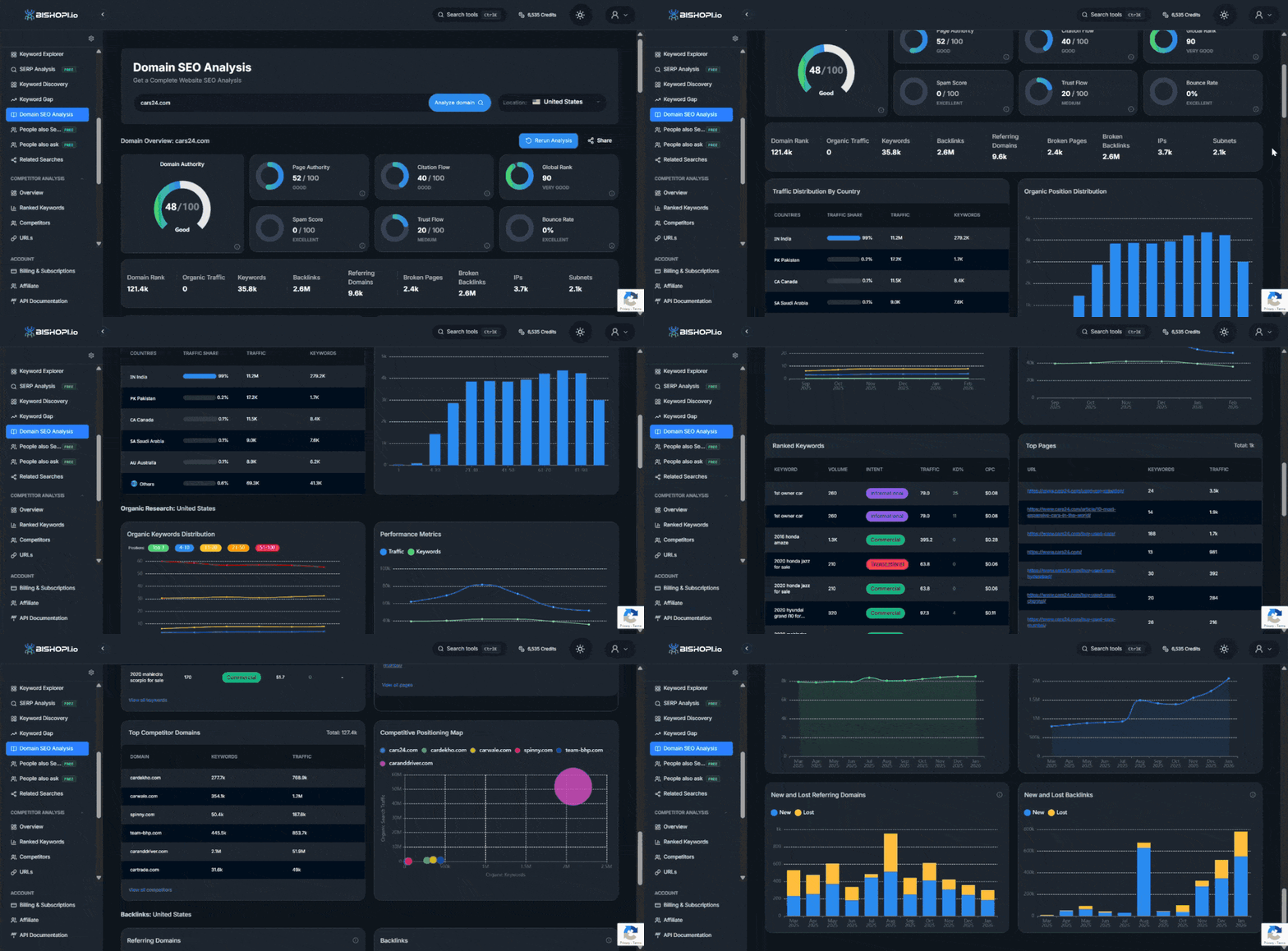
For SEO, you get detailed reports compiling rankings, backlinks, brand mentions, and more. For domain investors and flippers, you get value signals including sales history, domain authority scores, and traffic patterns.
If you value depth of data and research, Bishopi gives you more than any single-focus tool ever could.
[GIF via Bishopi]
Strengths
Real-time backlink analysis with actionable link quality signals
SERP tracking that surfaces competitor rankings and feature opportunities
Keyword Explorer with trend data built in
Domain valuation and SEO authority metrics in one place
SEO, SERP, and Traffic APIs for custom pipelines and automation
Limitations
Better suited for data-driven workflows than beginners looking for a simple dashboard
Practical Use Case
You are a domain investor evaluating a batch of expired domains for potential acquisition. You need SEO authority scores, backlink health, SERP history, and traffic estimates and you need them pulled programmatically, not clicked through one by one.
Bishopi's domain intelligence tools and API access make that kind of bulk evaluation practical.
The same applies if you are an SEO building a custom client dashboard that pulls live SERP and keyword data directly into your own reporting environment.
Pricing Details
Custom pricing available
Tool 4: Moz Pro - Strong Domain Authority Insights
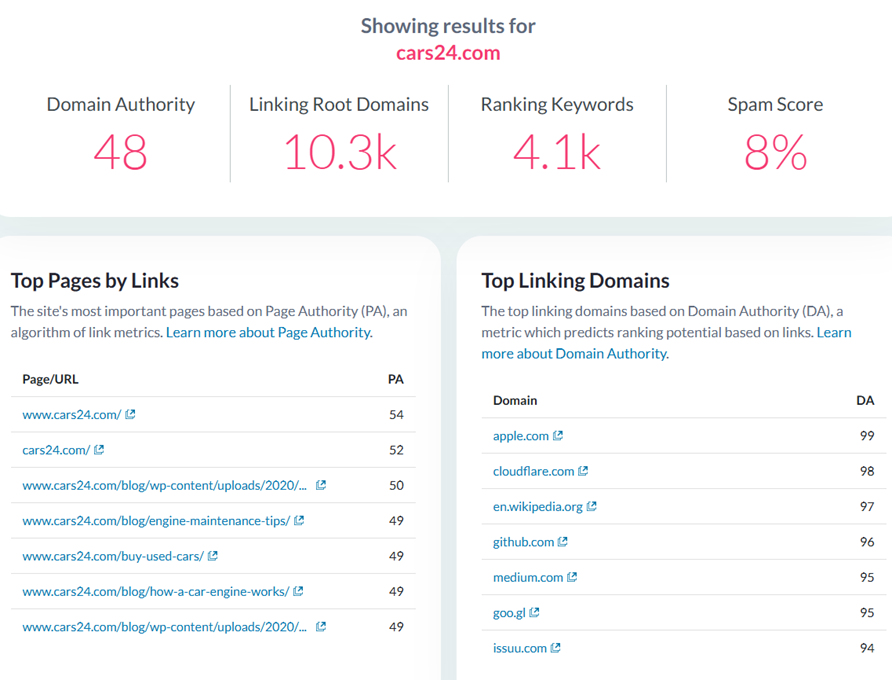
Moz Pro earned its place in the industry by making domain metrics that clients actually understand. If you spend time explaining SEO performance to non-technical stakeholders, that clarity is worth a lot.
[Source via Moz]
Strengths
DA and PA metrics are trusted and widely recognized by clients
Site audits are thorough and easy to interpret
Keyword tracking is reliable for core use cases
Reporting is straightforward, which works well for client-facing teams
Limitations
Backlink index is smaller than Ahrefs or Majestic
Data freshness can lag on crawls
Fewer advanced features for technical SEO work
Practical Use Case
Let’s say your marketing director wants clarity on your performance, not a technical deep dive. They’re asking three simple questions: Is the site getting stronger? Is our content investment working? And how do we compare to our top two competitors?
Moz Pro helps you answer those fast. The reports are visual and easy to follow, so the story is obvious: growth, gaps, and direction.
Instead of defending data, you’re showing progress in a way that makes sense to a non-SEO stakeholder.
Pricing Details
$99–$599+/month (custom Premium+)
Tool 5: SpyFu - Competitor Keyword and PPC Insights
SpyFu is built for one specific kind of curiosity: what has your competitor actually been doing in search for the past several years? It gives you a complete picture of your competitive landscape, their traffic share, keywords, and more.
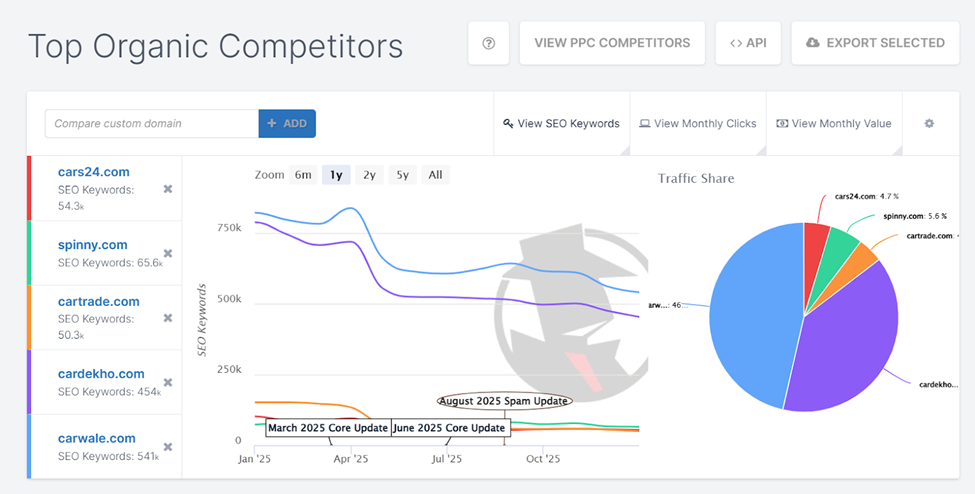
[Source via SpyFu]
Strengths
Deep competitor keyword history going back years
PPC and organic strategy overlap gives a fuller picture of competitor positioning
Keyword grouping and ad copy history are genuinely useful for paid search teams
Pricing is competitive compared to broader platforms
Limitations
Not a full-stack SEO tool, weaker on technical audits and backlink depth
Data can feel dated compared to real-time focused platforms
Practical Use Case
Let’s say you want to understand how your competitor got up in the SERP for a specific keyword. SpyFu is a great fit as it gives you ranking shifts over time, along with archives copy.
You can even check PPC history, where their organic visibility has grown or slipped, and which ads have stayed live long enough to signal performance.
Pricing Details
$39–$79+/month (custom Agency)
Tool 6: Mangools - User-Friendly Keyword Research
Mangools keeps things simple. It focuses on keyword research and SERP analysis, nothing more. The interface is clean, the workflow is fast, and you’re not buried under features you won’t use. That simplicity is the real advantage.
It’s built for straightforward keyword research, not enterprise reporting. Perfect for niche sites and lean content teams.
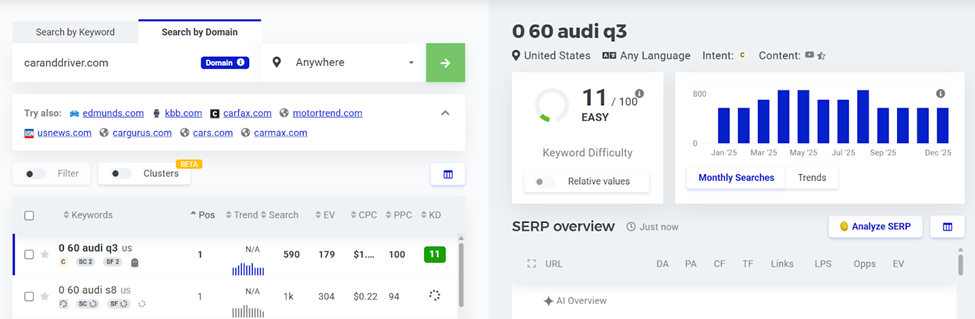
[Source via Mangools]
Strengths
Interface is clean and fast to navigate
KWFinder is one of the more intuitive keyword research tools available
SERPChecker gives useful SERP snapshot data
Pricing is accessible for individuals and small teams
Limitations
Backlink database is limited compared to dedicated link analysis tools
Not suited for large-scale site audits or technical SEO
Lacks the depth needed for enterprise-level work
Practical Use Case
If you’re building a content calendar and need low-competition keywords with solid search volume, Mangools helps you find quick-win opportunities, check the current SERP, and gauge competition fast.
Pricing Details
$49–$169+/month
Tool 7: Surfer SEO - Content-Centric Optimization
Surfer SEO starts where most SEO tools stop. Instead of telling you what keywords to target, it tells you how to build content that can actually rank for them based on what is already working in the SERP.
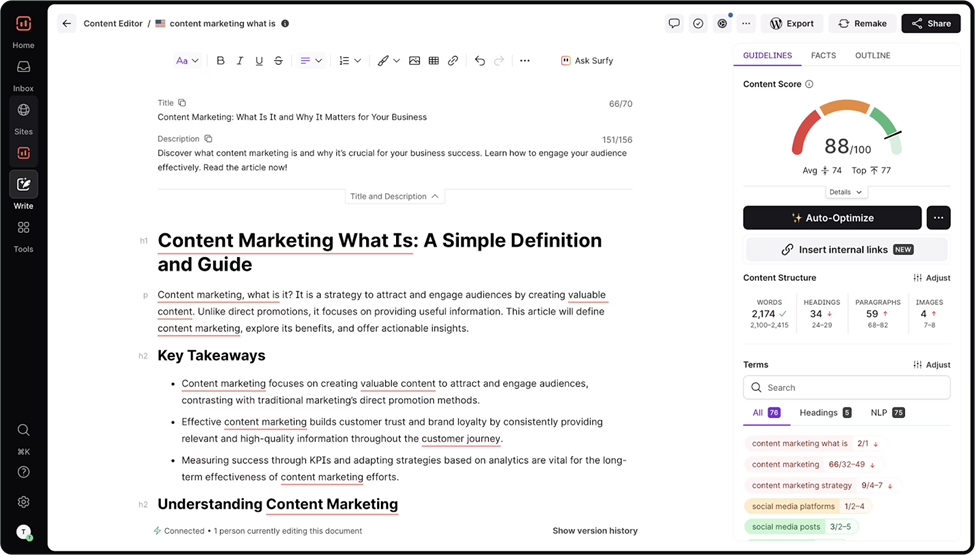
[Source via Surfer SEO]
Strengths
Content editor gives real-time optimization guidance as you write
SERP Analyzer breaks down what top-ranking pages share structurally
NLP insights help align content with how search engines interpret topics
Integrates with Google Docs and WordPress for smoother workflows
Limitations
Not a full SEO suite, limited backlink and keyword database depth
Works best as a complement to broader platforms, not a standalone solution
Pricing can feel high for the narrower feature set
Practical Use Case
Say your team is writing a pillar page around a high-value keyword. You don’t want to guess the ideal length, heading structure, or which related terms to include.
Surfer SEO guides your writer in real time as they draft. Instead of publishing first and optimizing later, you build the optimization into the content from the first paragraph.
Pricing Details
$89–$219+/month (custom Business)
Tool 8: Screaming Frog - Technical SEO Deep Dive
Screaming Frog is a technical SEO crawler that gives you direct visibility into what causes technical site issues that impact your performance. It’s best suited for technical SEOs, in-house teams managing large sites, and agencies handling audits or migrations.
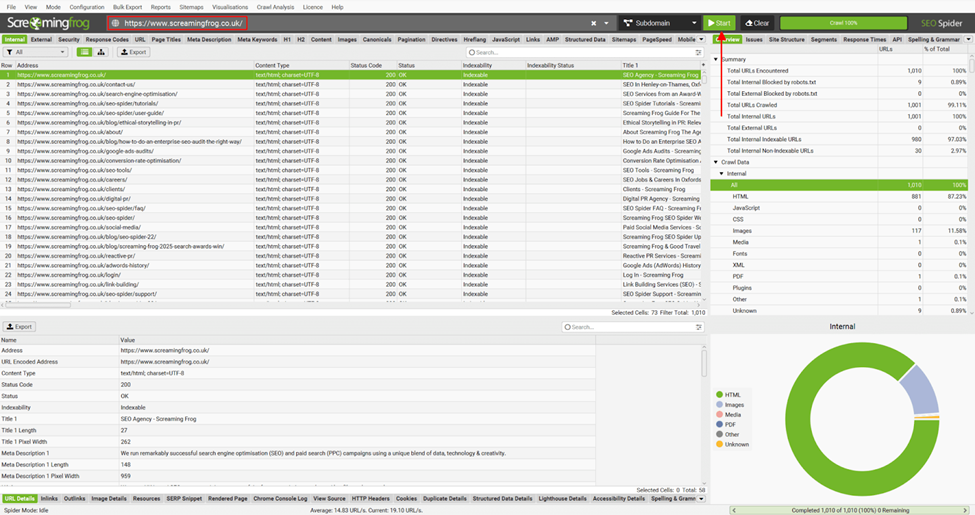
[Source via Screaming Frog]
Strengths
Crawl depth and accuracy are best in class for technical audits
Identifies broken links, redirect chains, duplicate content, and missing metadata at scale
Custom extraction lets you pull specific data points from any page
Annual pricing is straightforward and scales well for agencies
Limitations
No keyword research, backlink data, or rank tracking built in
Desktop-based interface has a learning curve for new users
Reporting requires manual setup compared to cloud-based platforms
Practical Use Case
When you want a technical report for a big website (for example, 20,000 webpages), Screaming Frog is the best choice.
In just under half an hour, it covers the full technical baseline: broken links, redirect chains, duplicate title tags, missing meta descriptions, orphaned pages, and crawl depth issues.
Pricing Details
Free (limited) or ~$330/year
Tool 9: Similarweb - Traffic and Market Intelligence
Similarweb is a digital intelligence platform focused on traffic and market insights instead of keywords. You can estimate total visits, traffic sources, audience geography, device split, referral partnerships, and even which channels drive the most growth.
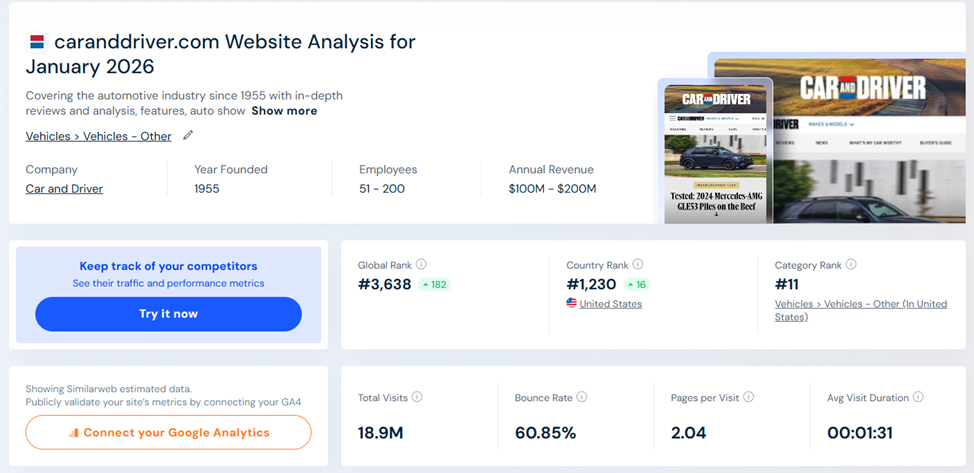
[Source via Similarweb]
Strengths
Traffic source breakdowns across organic, paid, referral, and direct
Audience demographic and interest data adds useful context
Competitor benchmarking across industries is strong
Useful for market research beyond traditional SEO reporting
Limitations
Traffic estimates are approximations, not exact figures
Weaker on keyword-level data compared to dedicated SEO tools
Pricing at higher tiers is significant
Practical Use Case
You are building a market entry strategy for a client launching in a new vertical. You need to understand how the top three incumbents are acquiring traffic, what channels they are investing in, and where there are gaps worth targeting.
Similarweb gives you that channel-level picture across organic, paid, referral, and direct in a way that pure SEO tools are not designed to do.
Pricing Details
$10,000+/year (custom enterprise)
Tool 10: Google Search Console and Google Keyword Planner - Free and First-Party
If you want a free SEO tool, start with Google Search Console and Google Keyword Planner. All the data comes straight from Google. You see the actual queries driving impressions and clicks, plus real keyword volumes. It’s limited, but it’s first-party and reliable.
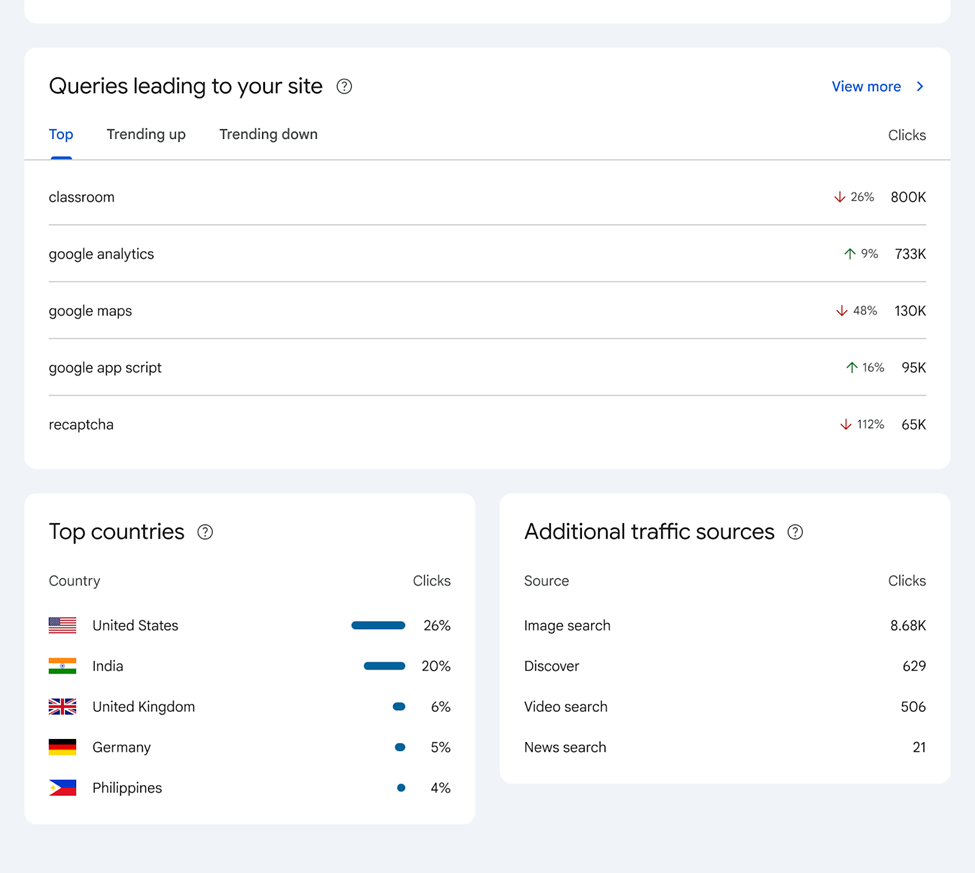
[Source via Google]
Strengths
Search Console surfaces crawl errors, index coverage, and Core Web Vitals
Keyword Planner is reliable for broad volume and trend research
Both tools are completely free
Limitations
Limited competitive intelligence compared to paid platforms
Keyword data in Planner is grouped and rounded at lower volumes
No backlink analysis, site audit depth, or rank tracking beyond basic impressions
Practical Use Case
Before you onboard a new client, run a quick audit in Google Search Console. You get performance data straight from Google, including queries, clicks, indexing issues, and coverage gaps. Since it’s free, you’re not committing budget before you even understand the baseline.
Pricing Details
Free
Quick Overview: Comparing Top SEMrush Alternatives
Tool | SEO Data Depth | Backlink Intelligence | Domain & SERP Insights | API Access | Ease of Reporting | Pricing Scalability | Best For |
Ahrefs | Excellent | Industry-leading | Strong | Moderate | Good | Moderate | Link building and competitive research |
SE Ranking | Good | Moderate | Good | Limited | Excellent | Excellent | Small to mid-sized teams and agencies |
Bishopi | Excellent | Strong | Industry-leading | Excellent | Good | Flexible | Domain intelligence, APIs, and SEO workflows |
Moz Pro | Moderate | Moderate | Excellent | Limited | Excellent | Moderate | Client reporting and domain authority tracking |
SpyFu | Good | Limited | Good | Moderate | Good | Excellent | Competitor keyword and PPC analysis |
Mangools | Moderate | Limited | Moderate | Limited | Excellent | Good | Beginners and small business keyword research |
Surfer SEO | Moderate | Limited | Strong | Moderate | Good | Moderate | Content optimization and on-page strategy |
Screaming Frog | Excellent | None | Limited | Moderate | Moderate | Excellent | Technical SEO audits and crawl analysis |
Similarweb | Limited | None | Strong | Good | Good | Limited | Traffic intelligence and market research |
GSC and GKP | Good | None | Moderate | Limited | Good | Excellent | First-party data and budget-conscious teams |
Take Your Pick!
Before you switch from SEMrush, get clear on what’s missing in your current setup.
Are you hitting API limits? Do you need deeper domain data? Are you paying for features you barely use? Start with your workflow, not the feature list.
Then choose a SEMrush competitor that fits how you actually operate and still makes financial sense as you scale.
Quick tip: Test the free plan first and run real use cases through it. See if it holds up under your data needs.
Explore Bishopi’s SEO tools for free
Frequently Asked Questions
1. Which are the best affordable SEMrush alternatives?
Ahrefs, Bishopi, SE Ranking, and SpyFu are some of the cheaper alternatives to SEMrush.
2. Which is the cheapest SEO tool?
GSC and Google Keyword Planner are free SEO tools. The scope is limited, but for early-stage projects or lean teams, it’s a solid starting point.
3. Which are the best tools for generative engine optimization (GEO)?
For GEO, the priority is structured data you can plug into your own systems. Bishopi stands out for API-driven access to domain and SERP data. Ahrefs and Moz also work well when you need reliable backlinks and ranking signals to feed into generative workflows.
Originally published at: www.bishopi.io
Stay up to date
Get updated with all the news, update and upcoming features.