How to Track Domain Expiry Dates and Capture Dropped Domains
Every domain in your portfolio has an expiry date. Miss it, and you hand a competitor a domain you spent years building backlinks into. Watch someone else's expiry date closely enough, and you pick up a high DR aged domain for the cost of a registration fee instead of five figures at auction.
This article covers both sides of the expiry game: protecting the names you own, and acquiring the names you want. A domain expiry checker is the starting point for both, but how you use that data is what separates a reactive registrant from a proactive investor.
Most investors still rely on scattered WHOIS checks and registrar dashboards that don’t scale. You need a system that:
Surfaces domains expiring soon across registrars
Flags opportunities before they drop
Lets you evaluate domain value fast
Tools like Bishopi domain value analysis already give you a quick read on whether a domain is worth chasing. But that’s only useful if you’re catching expiry signals early.
Learn how to monitor renewals and grab dropped domains.
What Happens When a Domain Expires?
When a domain reaches its expiration date, it doesn’t immediately become available. It moves through a defined lifecycle governed by registry policies and ICANN rules.
According to ICANN, domains follow a structured expiration and deletion process designed to give registrants multiple chances to recover ownership before release.
Here’s the actual lifecycle investors need to track:
Stage | Timeline | What happens | Investor action |
|---|---|---|---|
Active | Until expiry date, typically 1–10 years | Domain is live and registered | Track domain expiration date centrally across portfolio |
Grace Period | Varies by registrar. Most registrars offer 0–45 days | Domain deactivates; registrant can still renew at standard cost | Last chance to renew. Watch competitor domains here |
Redemption Period | Exactly 30 days (most gTLDs) after grace | Registrar holds domain; renewal possible but at additional fees around $50–$200+ | Prepare acquisition strategy |
Pending Delete | 5 days | Domain queued for deletion; no renewals accepted | Set up backorder or drop alerts |
Public Drop / Auction | After pending delete | Domain releases to the public or enters auction | Compete via auction or drop-catch service |
According to the DNIB quarterly report, the combined renewal rate for top level domains .com and .net was just 73.9% in Q4 2024. This means roughly 1 in 4 domains in the world's largest TLD categories lapses every quarter, releasing a constant pipeline of names back into the market.
Here is the domain lifecycle in practice:
Active: This is where most investors get lazy. If you don’t have an effective domain expiration monitoring strategy, you’re flying blind.
Grace period: The domain is technically expired, but still recoverable. Many owners renew here so don’t assume availability yet.
Redemption period: This is where intent becomes clear. If a domain enters redemption, the domain owner is likely letting it go.
Pending delete: This is the critical phase. No one, not even the original owner can recover the domain. This is where drop preparation happens.
Public drop: The domain is released to the public for drop-catching services, registrars, and investors to buy.
How to Check When a Domain Expires
Checking when a domain expires can sound simple, but at portfolio scale or when you're tracking dozens of target domains across registrars, the method matters.
You can check the domain name expiration date using three approaches: WHOIS lookup, registrar dashboards, and bulk or API-based lookups.
Here is a closer look at the domain expiration lookup methods.
1. WHOIS Lookup—fast but manual
A WHOIS lookup pulls the public registration record for any domain, including:
Expiry date
Registrar
Registration history (sometimes)
It's the fastest way to do a one-off domain name expiry check on a domain you don't own.
Limitations
It involves a manual domain name expiry check
You can only check one domain at a time
WHOIS privacy protection sometimes hides the expiry date or shows incorrect registrar data
If you're watching 50 domains, WHOIS can become a time sink
There is inconsistent formatting across registries
2. Registrar Dashboard—accurate but siloed
Domain registrar dashboards are the most reliable places to see expiry dates, renewal status, and auto-renew settings but only for domains you own.
Limitations
Siloed by registrar
If your portfolio spans across different registrars, you're logging into three separate dashboards with no unified renewal calendar and no cross-registrar alert system
There's no way to track domains you don't own but want to acquire
3. API-Based Domain Expiry Checker—the scalable solution
This is where a real domain expiry checker becomes useful.
If you’re managing 10+ domains or actively monitoring target domains, manual checking is not effective. API lookup is the only viable domain expiration monitoring approach you can use.
Instead of running a domain name expiry check one-by-one, you:
Input large domain lists
Retrieve structured expiry data
Automate monitoring workflows
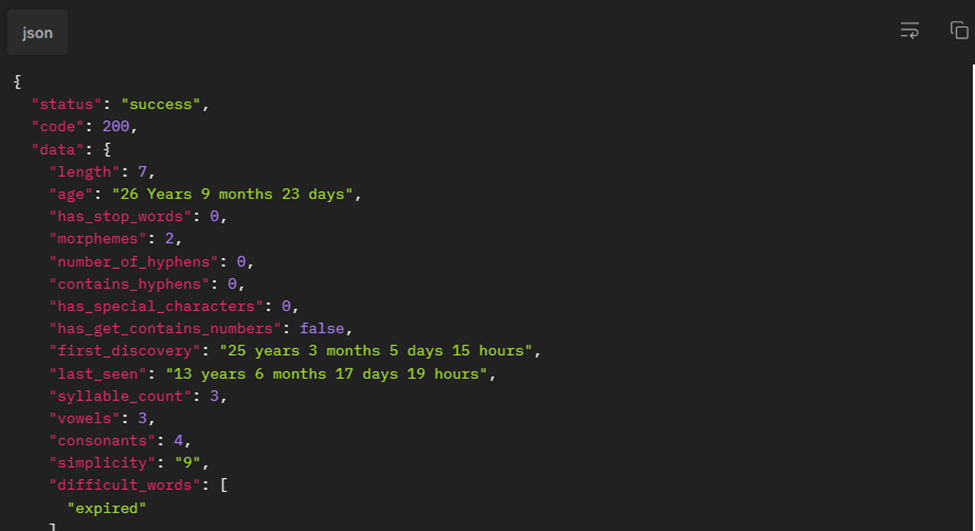
For instance, using the Bishopi domain data API, you can perform domain expiration lookup at scale. You can query over 50 domains and get structured expiry data, including registration dates, expiry dates, and registrar information.
What’s more? A domain analysis API lets you:
Check expiry across large portfolios
Build watchlists for multiple domains expiring soon
Integrate expiry data into acquisition pipelines
Limitations
Data freshness depends on the API provider's update frequency
Unlike a WHOIS lookup or registrar dashboard, a bulk API integration needs someone to build and maintain the pipeline
How to Monitor a Portfolio Without Missing Renewals
Monitoring domain expiration across a real portfolio means solving a coordination problem.
Your first registrar dashboard shows you the domains you own. Another shows your other domain names, and a third one is the same.
None of them talk to each other, and none of them knows about the target domains you're watching but don't own yet.
Effective domain renewal tracking requires a layer that sits above the registrars, aggregating expiry data, standardizing alert thresholds, and surfacing domains that need attention before they enter the grace period.
You need a domain renewal tracker that does three things:
Trigger alerts at defined thresholds: 30 days(review), 14 days(decision), 7 days(action).
Consolidates data: Pulls domains from multiple registrars into one view
Support automated notifications: Via email, webhook, or API-based notifications
This is especially crucial if you track client domain expiration alongside your own portfolio.
The Multi-Registrar Problem
Most domain investors operate across multiple registrars, portfolios, and acquisition targets.
Track client domain expiration or your own across registrars and you face the following challenges:
Missed renewals
Incomplete visibility
Delayed decision-making
To avoid this, you need a scalable domain monitoring tool like the one offered by Bishopi that aggregates expiry data regardless of where the domain lives.
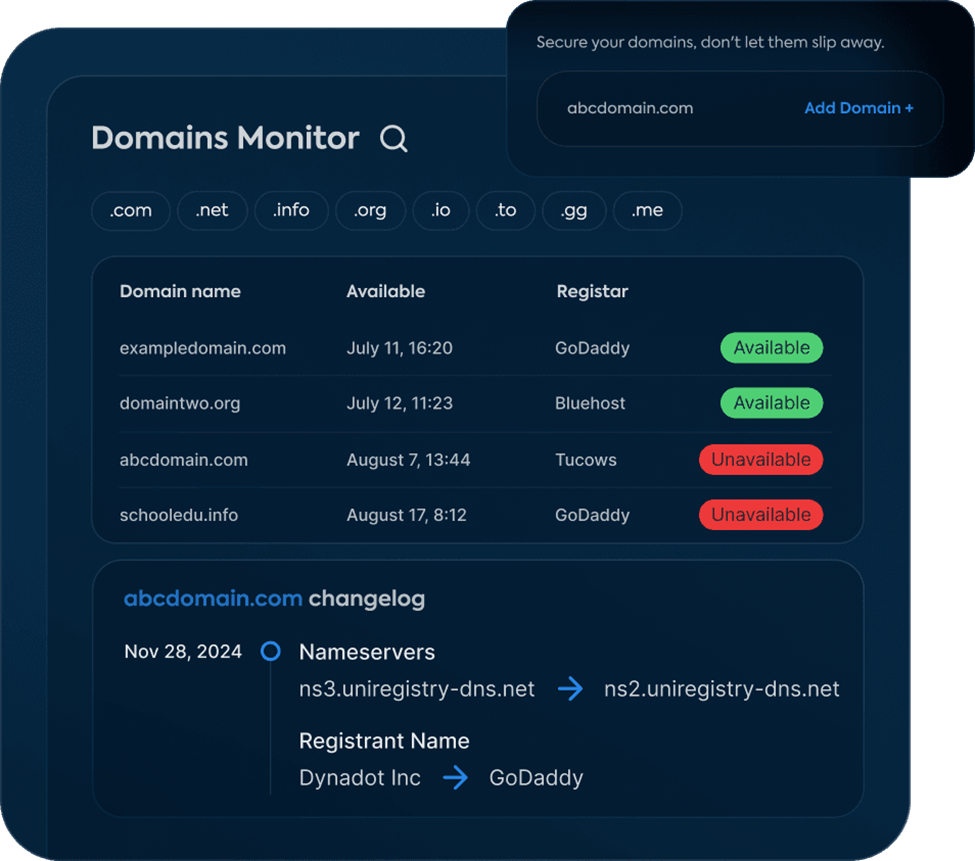
This tool can:
Aggregate domain renewal data across sources
Track lifecycle transitions automatically
Send configurable domain expiry reminders before critical deadlines so your team or automation stack can respond programmatically
Integrate with APIs for automation
Prioritize domains based on importance
Monitor WHOIS changes that indicate ownership shifts
How to Find and Grab Dropping Domains
Monitoring domain expirations is both a defense and a way to spot new opportunities. The same data you use to protect your portfolio can help you identify valuable domains to acquire.
Since expired (or “drop”) domains are released on a predictable schedule, the investors who succeed are those with a research and acquisition system already in place—not those rushing to assess quality after a domain appears at auction.
Let’s learn how to uncover and grab dropping domains before anyone else.
Step 1: Source Domains Expiring Soon
Dropped domain names and domains expiring soon appear across several sources, including:
Drop-catching services: DropCatch, SnapNames, and NameJet all list recently dropped domains and domains in pending delete. DropCatch operates 1,200+ ICANN-accredited registrars. It sends simultaneous registration requests the moment a domain drops.
WHOIS expiry data via API: You can build a watchlist of target domains and monitor their expiry dates to catch drops before they show up on aggregator lists where competition is already higher.
Auction platforms: GoDaddy Auctions and Sedo regularly feature expiring domains going to auction. Notably, GoDaddy phased out backorders entirely in August 2024 and shifted its full focus to the auction platform.
Step 2: Research the Domain Before You Bid
Speed matters in domain catch scenarios, but bidding without due diligence is how investors waste capital on penalty-hit domains with inflated backlink profiles.
Before buying a domain name, check:
Domain rating and authority: Is the claimed domain authority real, or inflated by low-quality links? Verify with an independent tool.
Backlink profile quality: Aged domains accumulate links, but not all links are equal. A February 2025 analysis of 915 expired domains (DR 20+) purchased on GoDaddy found that 22.9% were immediately flipped after purchase, often because buyers discovered the backlink profile didn't hold up under scrutiny.
Traffic history: Organic traffic before a domain dropped signals genuine authority. A domain with no traffic history despite its age may have been inactive for years or penalized algorithmically.
Google spam or penalty signals: Google's March 2024 Core Update introduced a specific policy on expired domain abuse. The update targets sites that repurpose dropped domains to host content entirely mismatched from the original purpose.
You can use an SEO API to uncover domain authority metrics, search visibility data, and keyword rankings. The API lets you evaluate recently dropped domains in bulk without manually pulling metrics for each.
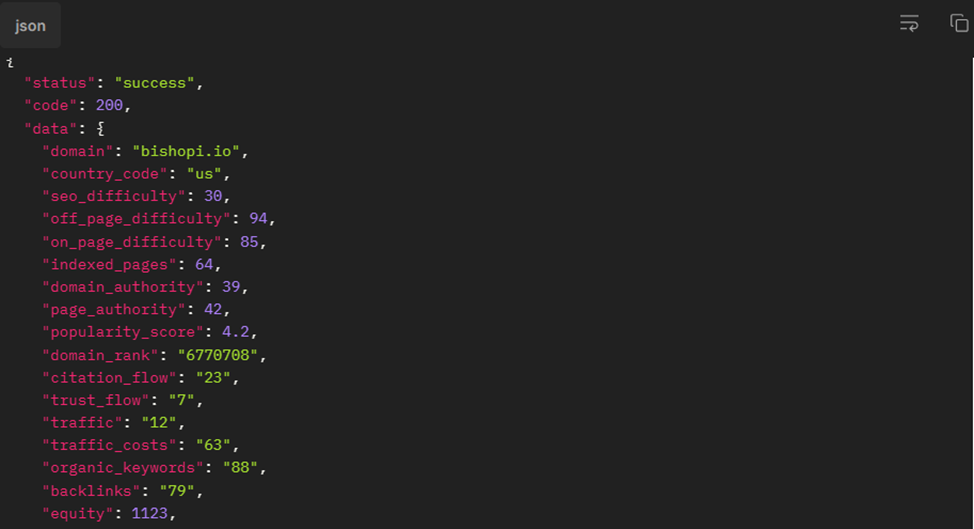
A backlink analytics tool can surface a comprehensive backlink profile for any domain so you can assess link quality, referring domain diversity and anchor text distribution before you place a bid.
Step 3: Catch vs. Auction — Know How Each Works
A domain catch is when a drop-catching service submits a registration request the moment a domain enters the public drop, often within milliseconds. Multiple services compete simultaneously, which is why backordering through more than one service increases your odds for high-value names.
A backorder is a pre-placed order that queues your registration attempt before the domain drops. If multiple investors backorder the same domain, it typically goes to auction among the competing bidders rather than being released at the standard registration price.
For domains with serious backlink equity or established traffic, expect an auction. Budget accordingly and use your pre-drop research to set a rational bid ceiling.
Common Mistakes Investors Make When Monitoring Domain Expiration
Even experienced investors make predictable errors when managing domain expiry data at scale. Here are a few mistakes to avoid when monitoring domains.
Relying on registrar auto-renew alone: Payment failures, expired credit cards, and account lockouts can silently disable auto-renew. Never assume it's working, verify.
Single-threshold alerts: A single 30-day email is not a renewal workflow. If it gets buried or missed, the domain enters grace period with no backup trigger.
Buying drop domains without backlink audits: A domain's age and DR don't tell you whether its links are legitimate. A 5-minute backlink check before bidding can save thousands in wasted acquisition spend.
Watching drops only through auction platforms: By the time a name appears in a curated auction list, the competition is already there. Build your own watchlist through WHOIS monitoring to get a lead-time advantage.
Ignoring redemption period pricing: If a domain you own lapses into the redemption period, renewal costs jump significantly. A domain worth $12/year to renew early may cost $150–$200 to recover from redemption. Track your own portfolio with the same rigor you apply to acquisition targets.
Turn Expiry Data Into Domain Opportunities on Autopilot
Whether you're protecting a portfolio of 500 names or building an acquisition pipeline around dropped domain names, your workflow must start with reliable expiry data. The investors who get this right aren't doing more manual work.
They are pulling bulk domain expiration data automatically, setting multi-stage alerts, and running pre-acquisition research before a domain even enters pending delete. Build the workflow once, and let the data surface the opportunities.
Explore how Bishopi domain tools can help you to start monitoring domain expiration.
Frequently Asked Questions
1. What is a domain expiry checker and why is it important?
A domain expiry checker is a tool that tracks when domains are due to expire across registrars. It’s essential for both protecting your portfolio and identifying acquisition opportunities. With a proper domain expiration monitoring strategy, you avoid missed renewals and can spot valuable expired domain names before competitors act.
2. How can I perform a domain expiration lookup at scale?
A domain expiration lookup can be done via WHOIS, registrar dashboards, or API-based tools. For scale, APIs are best since they allow bulk checks, automate alerts, and centralize data. This makes domain expiration monitoring efficient when tracking multiple domains or building acquisition watchlists.
3. What happens to domains after they expire?
After expiry, domains move through grace, redemption, and pending delete stages before becoming available. A domain expiry checker helps track these transitions. Monitoring these stages closely allows you to renew your domains on time or target expired domain names before they drop or go to auction.
4. How does domain expiration monitoring help with acquiring domains?
Domain expiration monitoring helps identify domains nearing expiry so you can prepare acquisition strategies early. By combining a domain expiry checker with domain expiration lookup tools, investors can track lifecycle changes, set alerts, and secure high-value expired domain names before they reach competitive auctions.
Originally published at: www.bishopi.io
Stay up to date
Get updated with all the news, update and upcoming features.