Publishing content after a keyword becomes saturated is a lagging strategy.
By the time the keyword looks reliable based on volume, competition has already formed, and the window for early movers has closed. This is the reality of depending on traditional keyword research. It is designed to describe demand after it has formed.
The advantage lies earlier when interest is still forming. Trending keywords show movement before they show volume. Therefore, learning how to find trending keywords in a niche means paying attention to growth signals.
In this guide, I show you how to locate these signals in your niche using data you can verify.
What Makes a Keyword “Trending”
In modern SEO, a keyword is trending because of movement, not size. This means the interest in a particular keyword is increasing relative to its past baseline.
Unlike seasonal keywords that recur, trending keywords experience a rise in popularity, usually driven by current events, viral topics, or breaking news. They simply tell you what is starting to happen right now.
In contrast, search volume tells you what has already occurred.
Note: High-volume keywords are a lagging indicator.
By the time volume stabilizes, SERPs are already crowded, intent is well defined, and competitors have built authority.
Trending keywords surface earlier when rankings are still fluid, and search engines are testing relevance.
This is best understood by contrasting indicators of emerging interest with lagging metrics.
Here’s how they compare at a glance.
Indicators of Emerging Interest | Lagging Metrics |
Rising queries (Google Trends) | Monthly search volume |
Directional growth over time | Historical traffic data |
Early impressions in Google Search Console | Long-term ranking performance |
Query expansion around a topic | Keyword difficulty scores |
Repeated topic signals from communities | Fully established keyword datasets |
Caveat: A single indicator does not definitely confirm that a keyword will become high-volume or commercially valuable.
You need to combine several signals to help you identify areas of growing interest earlier than using volume-based research alone.
How to Find Trending Keywords in Your Niche
To find trending keywords, look beyond static metrics and focus on signals that depict change.
Here are practical ways to surface those signals within your niche.
1. Use Google Trends for Trend Data
Google Trends is a more direct way to identify trending keywords. It measures relative changes in search interest over time, rather than historical volume.
This helps you identify early demand changes before they appear in keyword databases.
Note: Focus on rising and breakout queries.
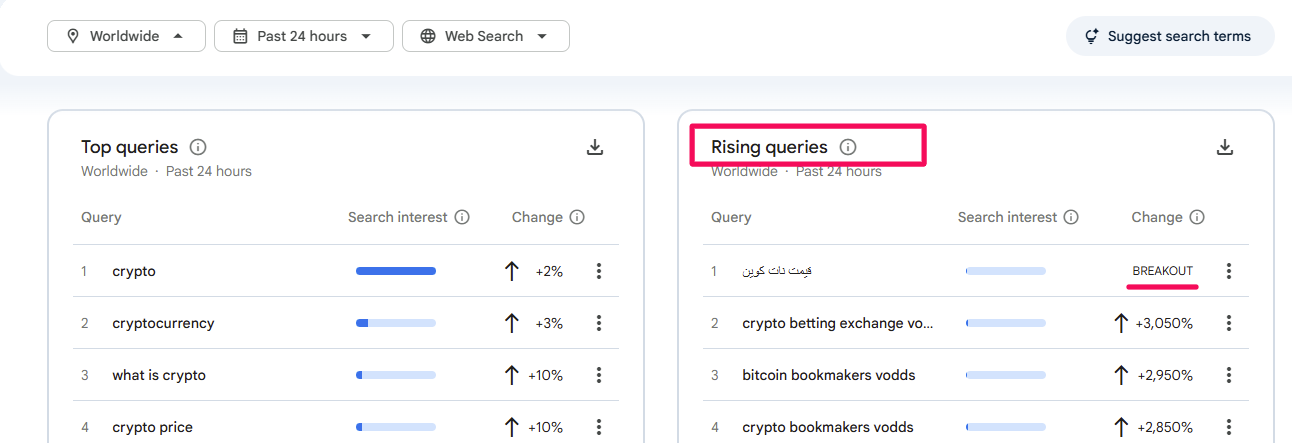
You get the most actionable data under:
Rising queries: Show you the trending keywords with significant growth compared to their previous baseline.
Breakout queries: Signal exceptionally rapid growth over a short period. This is often tied to newly emerging interests.
You can also apply category, geography, and time filters to avoid misleading signals.
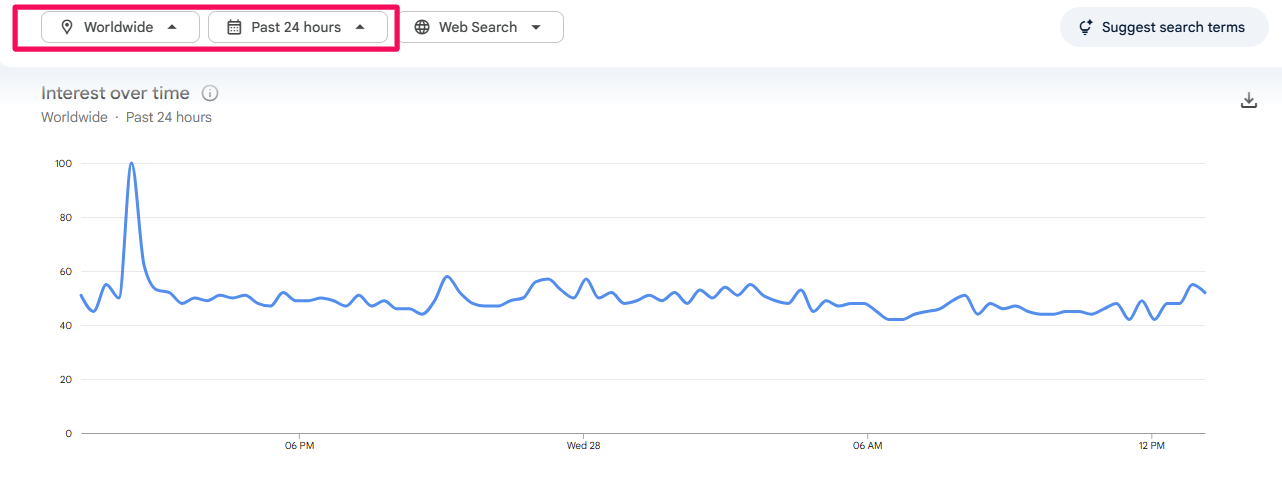
These labels reflect the rate of change rather than popularity. Therefore, treat them as candidates for validation, not finished keyword targets.
In practice, keywords that show an upward trend across multiple time windows, such as 30-90 days, are more reliable than those that spike briefly then flatten.
2. Identify High-Growth Keywords Using SEO Tools
SEO tools help you see the emerging keywords within your niche and evaluate how quickly interest is developing.
Here, the objective is to identify keywords whose visibility or demand is rising measurably.
Most modern tools, such as the Keyword Explorer, expose this through growth-oriented signals. You discover changes in estimated volume, impressions, or ranking coverage over time.
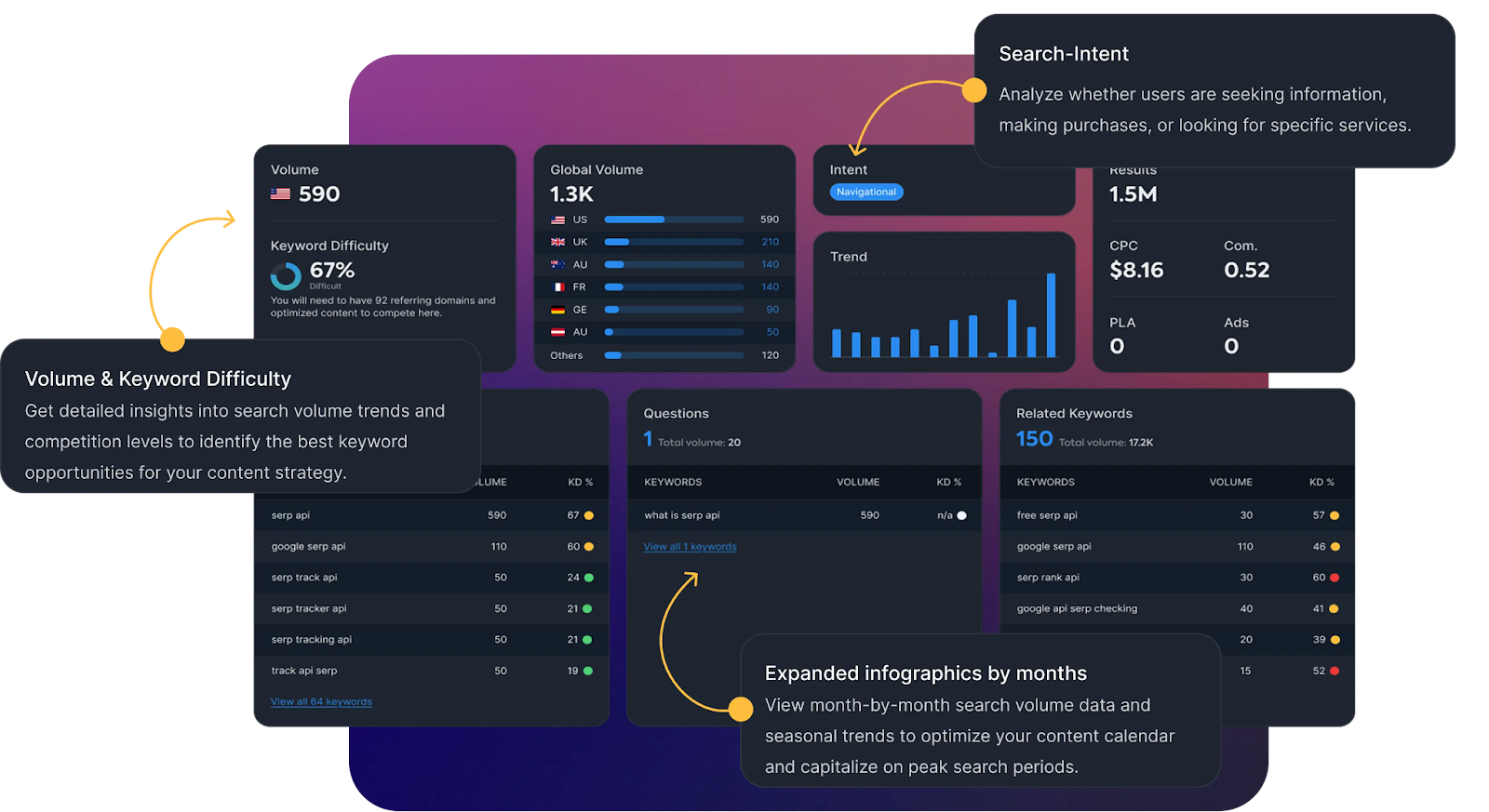
Ensure you prioritize:
Keywords showing a recent spike in estimated visibility or demand
Terms shifting from low or negligible volume into quantifiable ranges
Keywords gaining visibility across related queries rather than a single head term
A small increase can be meaningful when discovered early, before competition and content saturation rise.
Next, evaluate these growth signals in context:
Compare keywords within the same topic or cluster
Identify terms growing faster than closely related alternatives
These help you differentiate genuine keyword trends from broad market noise.
3. Validate Demand Growth with Google Search Console (GSC)
GSC gives you direct evidence of search demand. It reports impressions from real user searches on Google.
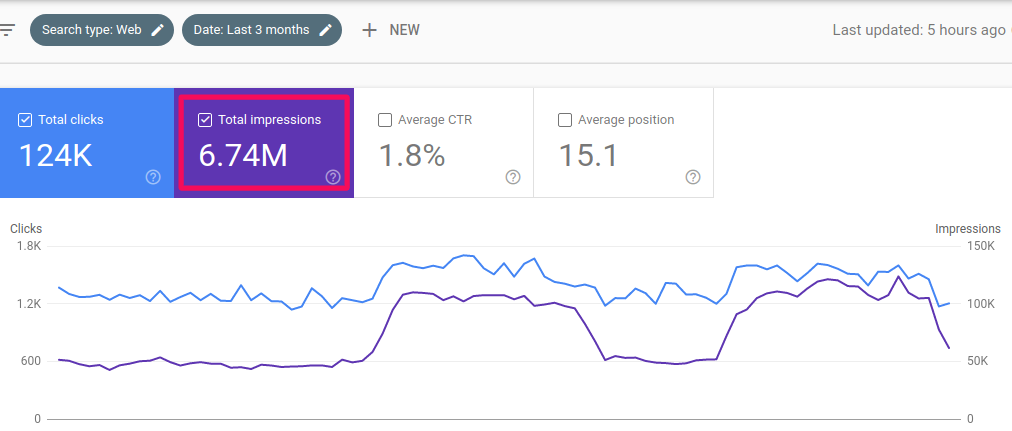
GSC is effective for validating whether interest is already forming around topics your site touches. However, it is most useful at the topic and query-cluster level, not for exact-match keyword validation.
Focus on these impressions as the early signals to find trending keywords. Early demand rarely surfaces as stable clicks or ranking.
Rather, it appears as:
Queries with rising impressions but few or no clicks
New queries surfacing for existing pages
Rising visibility across related queries rather than a single te
To avoid misreading noise as growth:
Compare the impressions across multiple date ranges
Look out for a consistent upward trend, not one-off appearances
Watch for clusters of related queries increasing together
Note: GSC can only validate demand trend for topics to which your site already has some relevance. If the site lacks a topical footprint, no impression will surface.
Important Distinction
Google Trends, SEO tools, and GSC are the only sources of trending keywords that directly measure shifts in search demand.
The other keyword trend sources discussed below only surface early signals. They do not measure demand growth.
4. Using Competitor Content to Confirm Direction
Monitor your competitor's activity to find trending keywords.
Here's how to approach this:
Identify new pages your competitors are publishing around the same topic
Verify whether other sites are independently covering that topic
Check if coverage surfaces before strong volume data exists
This Competitor Analysis tool helps you surface the metrics listed above, including keywords and competitor website traffic sources.
When multiple competitors pursue the same topic simultaneously, it implies shared recognition of emerging demand.
However, competitors only confirm direction, not actual demand. You still have to validate this from the search data.
5. Monitor Reddit to Surface Topics
Reddit discussions are usually intent-driven. This makes it ideal for identifying potential topics worth validating.
What to do:
Focus on niche-specific subreddits where users ask real questions
Identify recurrent discussions around the same problem
Watch out for threads with meaningful discussion
Users may describe the same problem in different ways. So, capture the underlying problem, not the exact wording.
Here’s a sample Reddit extract on underage bitcoin. The underlying question is whether an underage person can buy Bitcoins. A keyword can be centered on that.
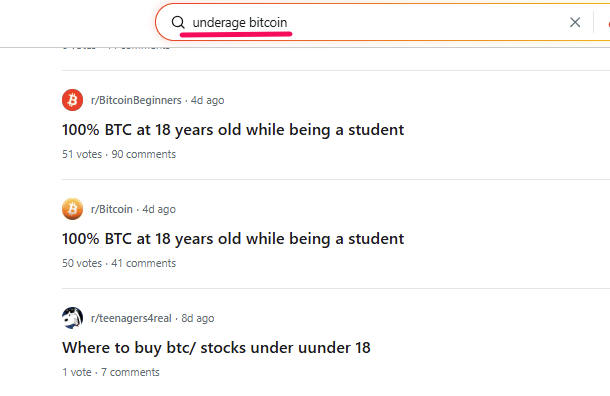
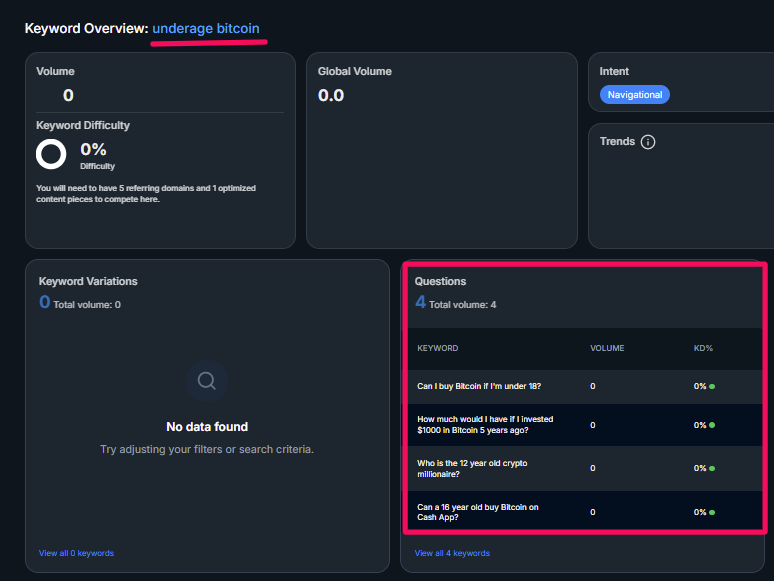
Convert the problem into a small set of testable search queries. Validate if anyone is actually searching for this keyword by entering it into a keyword Explorer.
Here are the metrics Keyword Explorer surfaces for the above Reddit Keyword.
6. Social and Professional Platforms
These platforms reveal how ideas spread among buyers, practitioners, or early adopters before they translate into search behavior. This is because social language often precedes search phrasing, particularly in SaaS, B2B, and emerging technology.
Here's what to look for:
Repetitive discussions around the same concept or challenge
New phrases or terms users consistently adopt
Changes in language used to describe a known problem or solution
Avoid focussing on likes, views, hashtag trends, or influencer amplifications.
Remember, the focus here is on adoption language, not engagement.
Default trends may be based on your personal interests. Therefore, the best approach is to search for your topic of interest and explore the top trends related to it.
From Signals to Search Decisions
Speed is an advantage in keyword research. Focusing on trends early helps you identify opportunities before volume and rankings stabilize.
This is why trend-driven SEO may outperform reactive strategies. Competitive intelligence also adds context to this by showing how other sites respond to the same shift.
If you want to find trending keywords without relying on manual checks, Bishopi can help. The platform evaluates emerging opportunities by tracking growth, competitive movement, and SERP analysis context together.
FAQs
How Do You Find Keywords for Content Writing?
To find trending keywords for content writing, you need to identify topics your audience is already searching for. Next, narrow the topics using search and performance data.
Here's how to go about it:
Review queries and impressions in GSC
Evaluate keyword clusters and growth trends in SEO tools
Study how competitors frame their content around similar topics
Platforms such as Bishopi can help you surface related keyword clusters and growth signals. This enables you to prioritize content topics with rising interest.
How Do You Find High Search, Low Competition Keywords?
You can find high search, low competition keywords by combining demand signals with competitive context. Avoid relying on volume alone.
Here's how to identify them:
Filter keywords with moderate-to-high search demand and exclude phrases dominated by strong brands
Analyze ranking URLs to examine content depth, freshness, and intent alignment
Check for query clusters where multiple related phrases have demand but isolated SERPs
Check early visibility or impression growth in GSC for adjacent topics
Originally published at: www.bishopi.io
Stay up to date
Get updated with all the news, update and upcoming features.