Domain Appraisal in 2026: How to Value Domains Like a Pro
Yes, but honestly, most people don’t. There’s a plethora of online domain appraisal tools available today. This makes automated domain valuation almost instinctive for domain investors.
Here’s the deal, domain valuation is not exactly a science. Just like any other form of value investing, the data is important - but so is market behavior.
A 2024 qualitative study on asset price behavior found that quality data plays a vital role in asset valuation.
In this guide, we will try to demystify how to value a domain name and whether you can do it yourself. Let’s dive in!
Why Domain Appraisal Is Commonly Misunderstood
Before we go farther, let's get one thing clear, domain appraisal is highly misunderstood.
You see, unlike stocks, property, and other traditional assets, the value of a domain is erratic and somewhat subjective. A seemingly low-tier domain name can gain value overnight.
Take .ai TLDs before 2022 (public release of ChatGPT), thesFe extensions were obscure. But currently, .ai domains are highly valued. These .ai TLDs, owned by Anguilla, injected over $32 million of dollars into the economy of that country in 2023 alone.
Evidently, the value of a domain depends on timing, buyer demand, and use case.
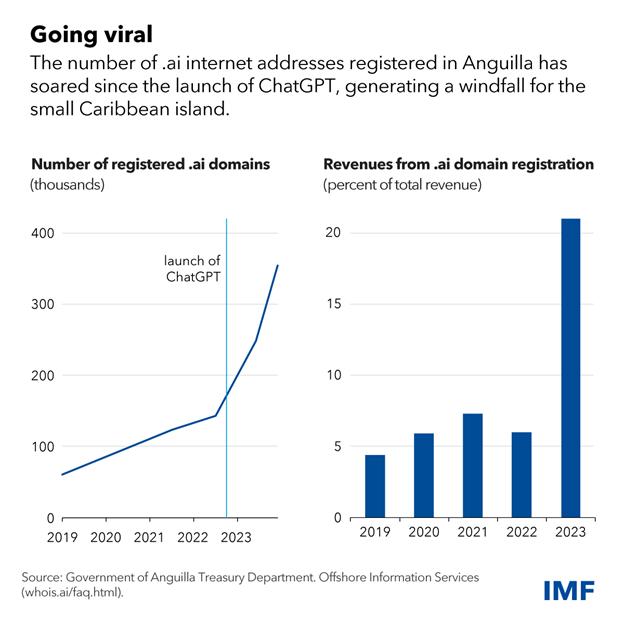
Source: imf.org
This is why you cannot rely on Reddit, NamePros or any single tool for domain appraisal accuracy.
How Automated Domain Appraisal Tools Work (and Their Limits)
You might come across appraisal tools like GoDaddy, Dynadot, and Humbleworth at some point.
Here’s how these tools work:
They use historical sales comparisons for domains that sound or look “similar” to your domain.
They rely on search metrics like volume and cpc to get a general idea of domain value.
Most appraisal tools also consider the length of the domains, with shorter domains generally being valued higher.
Domain appraisal tools also consider domain extensions, with .com generally valued higher.
Visibly, the valuation criteria used by most domain valuation tools have glaring limits. For context, these tools generally do not:
Consider market cycles, buyer motivation, or use cases.
Take into account the startup value or brand equity.
Accurately value longer brand names that may perform better than shorter versions.
Which brings us back to our original question - can you accurately appraise a domain by yourself? The short answer, yes you can.
You Can Appraise a Domain—With the Right Framework
The caveat is - you have to test it the way the buyers do, not the way the tools do. Here is a simple evaluation framework used by professional domain traders.
Factor | What to Check |
End-user fit | Who would realistically buy the domain and what problem, brand, or advantage it solves for them |
Market timing | Whether the domain aligns with a growing, stable, or declining trend that can amplify or reduce value |
Use-case clarity | How clear and immediate the domain’s practical or commercial use case is |
Brandability | Memorability, pronunciation, spelling, and visual/verbal appeal |
Scarcity within the niche | The availability of close substitutes and how rare the domain is in its category |
Comparable real sales | Recent, relevant end-user sales rather than automated or wholesale pricing |
Buyer psychology and budget | What the ideal buyer can realistically pay and the cost of not owning the domain |
The 5 Core Factors for Self-Appraising a Domain
To bring this topic full circle, let's dive deep into the key factors you should consider when appraising a domain on your own.
1. Market Demand (Beyond Search Volume)
Focus on commercial intent and real buyers. As stated earlier, a domain’s value depends on data intelligence and buyer psychology.
Hence, use SERP data to see who’s competing and monetizing. Ask yourself questions like, what’s the annual revenue of this competing company / domain? Does their domain contribute much to their brand equity?
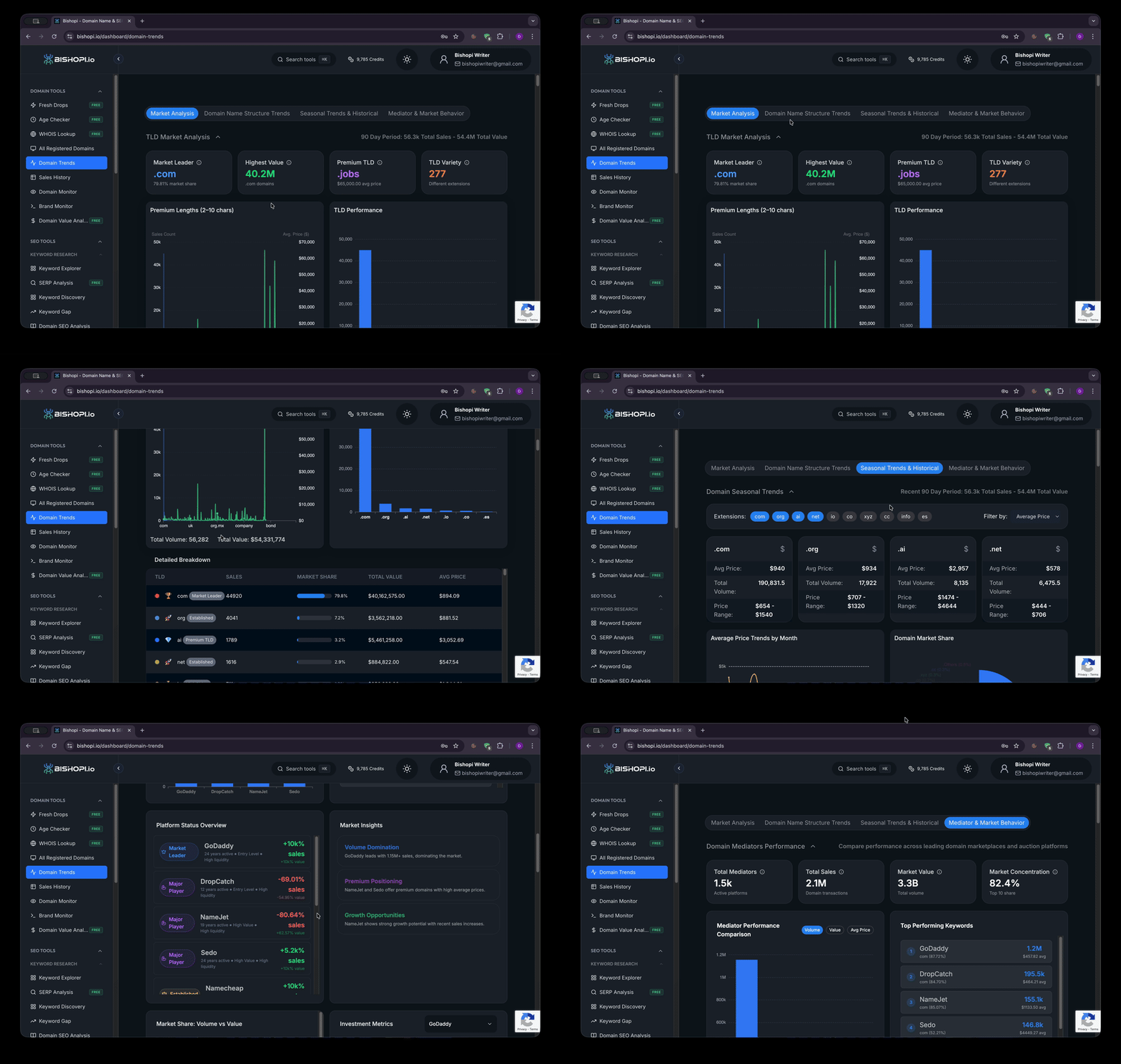
Bishopi goes beyond automated tools. It lets you appraise domains using real SERP data and keyword insights.
2. Comparable Sales (Reality Anchor)
Use recent, relevant competitor data (think same niche, domain length, and TLD similarity). The closer your domain is to your competitor comparatively, the better your valuation will be.
Avoid cherry-picked high sales to justify unrealistic pricing. Focus instead on repeatable, mid-range sales that reflect actual market behavior.
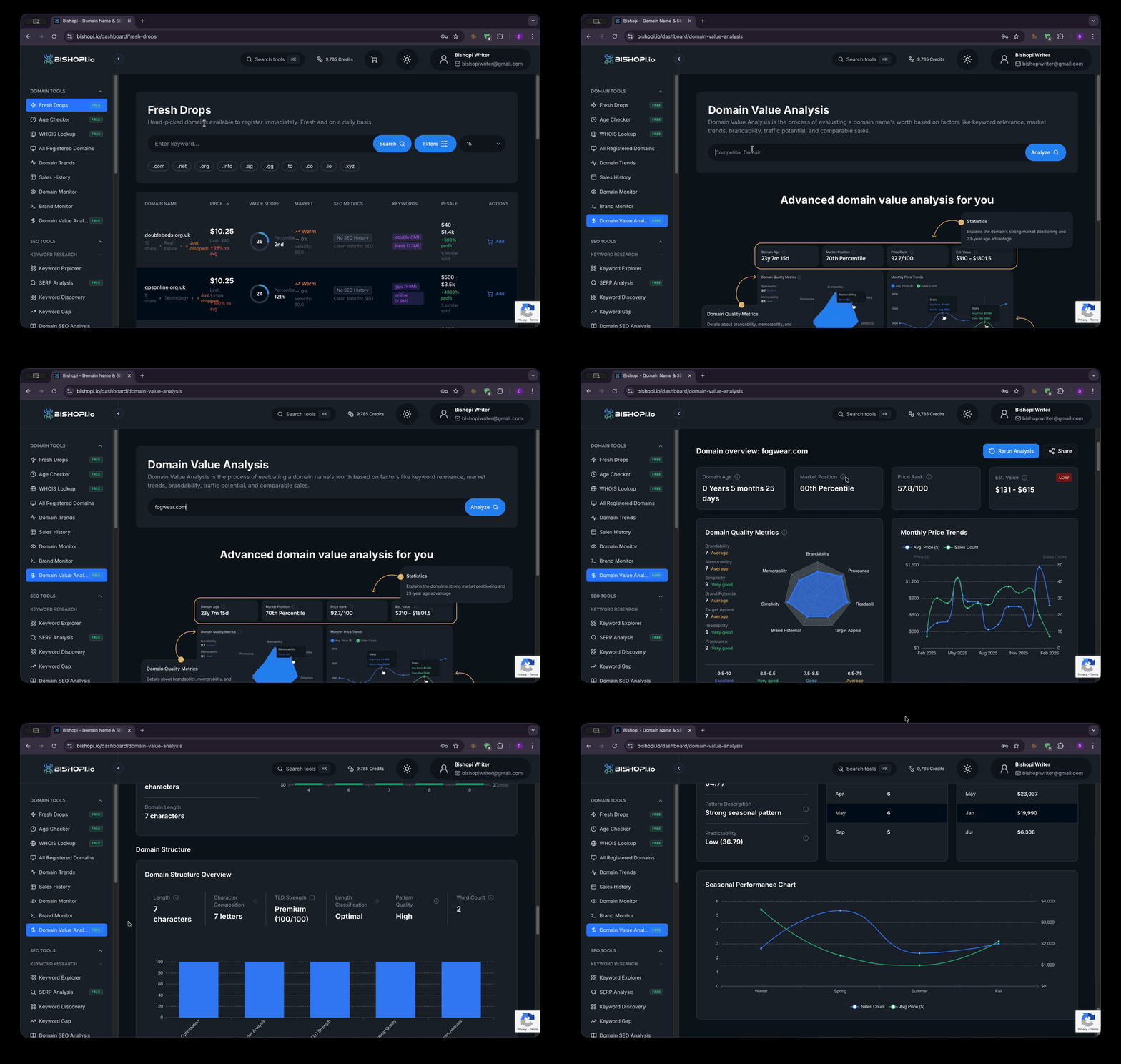
You can try Bishopi for free to help assess whether market conditions still support those prices.
3. SEO & Ranking Feasibility
Assess competition quality, not just backlinks. SEO is often one of the domain valuation methods that are misused. Backlinks do not give an accurate reflection of brand equity.
The distinction between brand vs non-brand SERPs matter. Focus on factors that are specifically tied to the brand itself, not external factors.
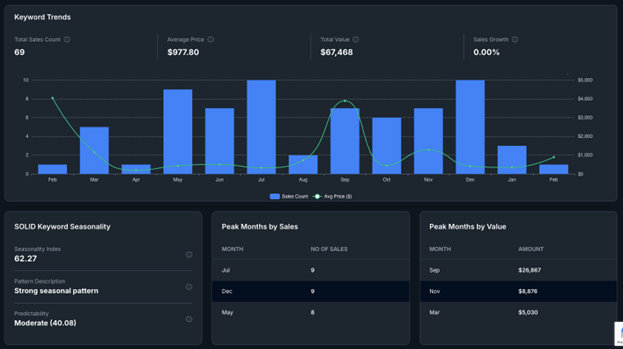
Bishopi can help you with real-time SERP competitiveness analysis. This allows you to separate brand and non-brand competitive factors.
4. Traffic Reality
You should separate assumed value from actual traffic potential. Don’t just take the traffic metrics from Moz as the final judge. High-value domains are not always high-traffic domains.
Distinguish brandables vs revenue-driven domains. Some domains might drive traffic but what does it really mean for revenue and value?
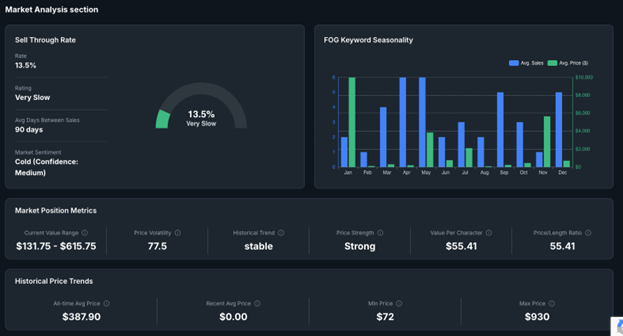
Bishopi allows you to make sense of traffic reality and search-based validation. This removes guesswork, letting you base domain value on real-world market signals.
5. Liquidity and Exit Potential
Finally, ask yourself - who would buy this domain and why?
There’s a clear difference in wholesale vs end-user pricing. This distinction is important in filtering artificially inflated domain prices.
In practice, prices are set by buyer intent and liquidity, not just listed value (Houlihan Lokey Report).
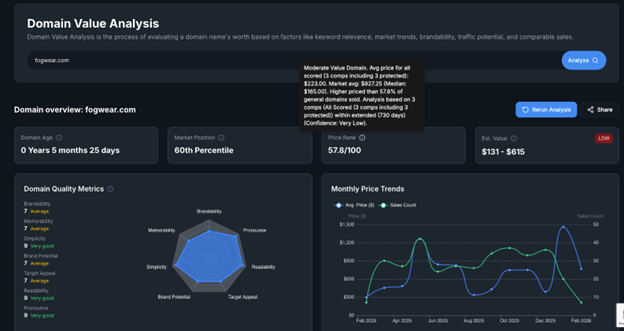
You should focus on understanding pricing decisions that are devoid of artificial inflation. Fortunately, there are many tools for realistic domain value.
Conclusion: Appraise It Yourself—But Use Real Data
To conclude, it is possible and recommended to appraise a domain yourself. Successful domain investors rely on data and their own judgment to come up with an accurate domain valuation. Understand that there is no single best domain appraisal tool.
So, can you appraise a domain yourself - with the right data? Yes indeed. Bishopi enables you to perform smarter self-appraisal through actionable intelligence. Explore Bishopi’s insight and valuation tools and appraise your domains with confidence.
FAQ
Q: What tools can I use for domain appraisal?
A: Bishopi offers a number of tools including domain sales history, domain trends, search all registered domains to check which TLDs are taken and thorough domain analysis.
Q: What factors should I analyze to estimate a domain’s resale value?
A: A domain’s resell value depends on its brand quality, clarity, buyer demand, and comparable sales. You can apply Bishopi’s domain value analysis to do a quick assessment.
Q: How can I identify emerging domain trends?
A: Keyword search growth, industry news, and recent domain sales patterns are crucial for determining domain trends.
Q: How can I know if a domain is high value?
A: A domain is of high value if it is brandable, easy to remember, and commercially relevant.
Originally published at: www.bishopi.io
Stay up to date
Get updated with all the news, update and upcoming features.