How to Evaluate Domain Reputation and Trust Signals
Poor domain reputation can affect your SEO performance, email deliverability, and overall website credibility online.
Here is why: search engines, email providers, browsers, and ad platforms all run a domain reputation check before deciding how to treat your website, your messages, and your brand.
The good news? Domain reputation isn't a black box. There are certain trust signals that Google and other platforms evaluate. There is also a systematic process you can follow to check domain reputation, identify red flags, and protect your online presence.
This guide explores key domain credibility indicators that Google and other platforms care about most. You will also learn how to check your domain reputation step by step. Along the way, we’ll see how domain name tools can help you automate these checks.
What Is Domain Name Reputation?
Domain reputation is the cumulative trust score assigned to a domain based on its historical behavior, technical signals, and usage patterns.
Running a comprehensive domain health check can reveal everything from who previously owned the domain, what kind of content it has hosted, and how emails addresses have behaved over time.
Domain Reputation vs Domain Authority
Domain reputation and domain authority are often confused terms, but the two measure different aspects of domain health and serve different purposes.
Here are the key differences between domain reputation and domain authority.
Aspect | Domain Reputation | Domain Authority |
|---|---|---|
What it measures | Trustworthiness, safety, historical behavior, abuse, and spam risk | Relative ranking strength is based largely on backlinks |
Primary focus | Legitimacy and risk assessment | Link popularity and SEO competitiveness |
How it is used | Spam filtering, ranking trust, indexing decisions, platform, and ad approvals | Competitive SEO benchmarking and link-building analysis |
Who relies on it | Search engines, email providers, browsers, ad platforms | SEO professionals and marketers |
Business impact | Affects SEO visibility, email domain reputation, deliverability, ad approvals, and brand trust | Helps compare domain strength, but doesn’t prevent penalties or blocks |
.
Who Evaluates Domain Reputation?
Domain reputation is evaluated continuously by multiple systems, each with different consequences when trust declines.
They include:
Search engines for ranking and indexing decisions
Email providers for spam filtering, inbox placements, and sender reputation
Browsers and security services for malware warnings, interstitial alerts, and access blocks
Ad platforms for account reviews, ad approval/rejections and suspension
Website visitors for perceived website credibility and brand safety
Domain Trust Signals Google Cares About in 2026
Google evaluates domain trustworthiness based on certain signals. Here is a list of domain credibility indicators the search engine checks:
1. Historical Usage Signals
A domain's past doesn't disappear when it changes hands or gets relaunched. Google maintains records of how a domain was used historically, and that history directly influences how the current site is evaluated.
Historical usage signals are particularly important for domain investors and anyone acquiring a pre-owned domain, as the past can follow a domain indefinitely.
Key historical domain trust signals Google evaluates include:
A domain’s previous ownership and use cases
History of spam, phishing, malware, or adult content
Sudden topic changes or ownership flips
Long periods of inactivity followed by aggressive publishing
A WHOIS domain lookup tool can help you verify domain availability and provide comprehensive registration data, including who owns a domain, registration dates, status, and more.
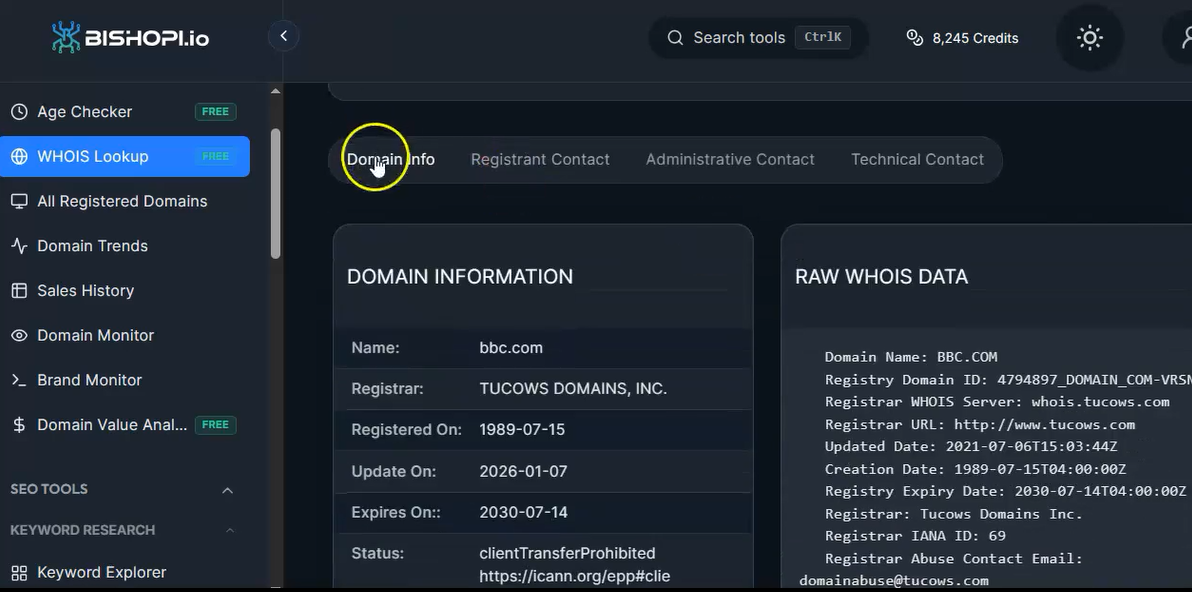
This free tool can also reveal the location of the domain and other sources.
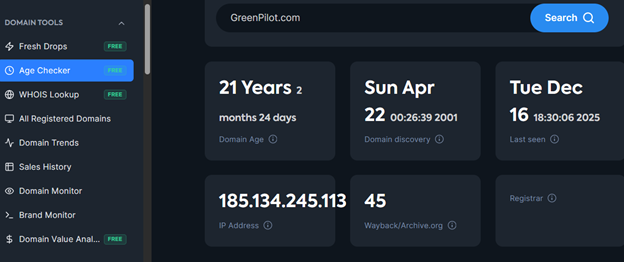
You may also use this domain age checker to analyze domain age metrics such as its age, last seen, IP address, domain archives, and registrar.
2. Link Profile Trust Signals
Backlinks still matter, but how they are acquired matters more than ever. Google now evaluates backlink patterns as behavioral signals rather than static endorsements.
Here are the key backlink check indicators Google considers:
Natural vs manipulative acquisition patterns
Toxic or interlinked spam networks
Anchor text over-optimization
Links from penalized or deindexed domains
You may use a backlinks analytics tool to get a granular view of your domain's entire link profile, including referring domain quality, anchor text distribution, link velocity over time, and toxic link identification.
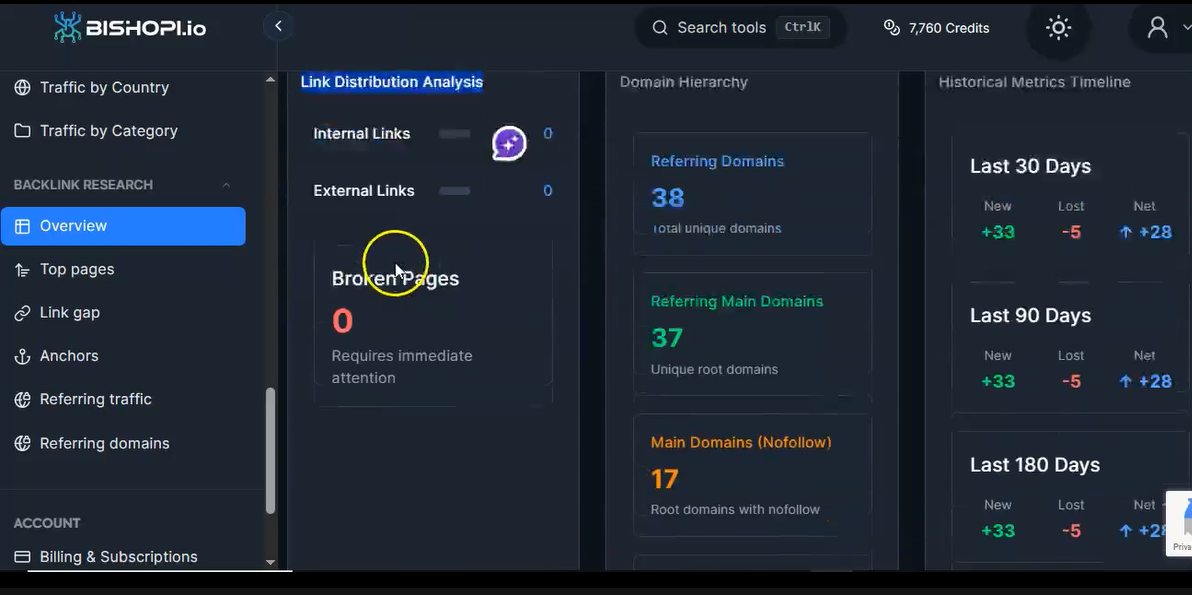
Using this tool, you can spot manipulation patterns before they trigger a penalty, or audit an acquired domain's link history before it impacts your SEO.
3. Content and On-Site Signals
Google uses the E-E-A-T (Experience, Expertise, Authoritativeness, Trustworthiness) framework to evaluate content quality as a domain trust signal.
Here are domain-level content trust signals that can impact your domain reputation score:
Originality, usefulness, and search intent alignment
Thin, duplicated, or auto-generated pages
Over-monetization through ads, affiliates, or intrusive popups
Topic consistency and demonstrated expertise
Alignment with E-E-A-T principles
4. Technical & Security Signals
Security infrastructure is now a foundational building trust signal and one that's entirely within your control. Google factors the following technical and security signals in its domain health check:
HTTPS and SSL certificate history
Malware or phishing flags
Redirect abuse
Hosting patterns linked to bad actors
Using a domain name monitor, you can track a domain’s reputation, check for malware and active threats to ensure your domain is safe and secure from malicious activities.
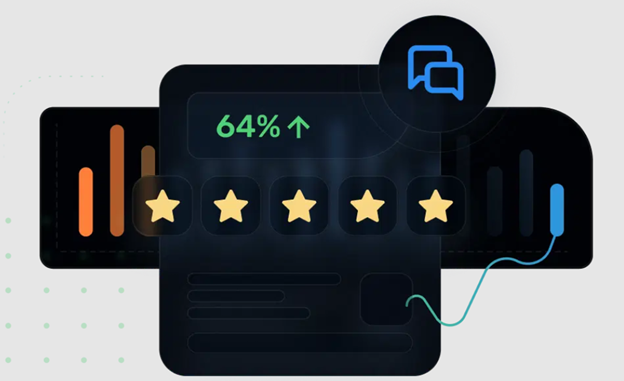
The tool will show the domain reputation as a percentage to give you an idea of a domain trustworthiness.
Why Domain Reputation Directly Impacts SEO & Growth
Domain reputation directly impacts SEO and growth in the following ways:
SEO Consequences of Poor Reputation
You can do everything right with your content strategy and still see minimal results if your domain-level trust is low.
Common SEO impact of poor domain reputation includes:
Difficulty ranking despite “good content.”
Slower indexing or crawl throttling
Decreased algorithmic trust
Increased susceptibility to penalties
Business and Monetization Risks
Beyond SEO, a poor domain reputation creates friction across every revenue channel.
Business and monetization risks of low domain reputation include:
Emails landing in spam or being blocked entirely
Ads disapproved, or accounts flagged
Affiliate networks rejecting domains
Loss of user trust and higher bounce rates
Modern domain intelligence platforms like Bishopi can help identify domain historical reputation risks and trust indicators before they impact SEO, email open rates and deliverability, or brand credibility. These platforms are built with tools for in-depth domain analysis and real-time monitoring.
How to Check Your Domain Reputation
A proper domain reputation check requires multiple layers of analysis. It involves evaluating multiple trust signals together.
Here are the steps to evaluate the reputation of your domain name.
Step 1 — Check Indexing and Visibility
Indexing status is the most direct signal of how search engines view your domain's trustworthiness. Search engines reduce visibility long before issuing penalties.
Check:
Whether the domain is indexed
If there are sudden drops or missing pages
For manual actions or warnings (if available)
If you notice unexplained indexing inconsistencies in a domain, it could be having reputation issues.
Step 2 — Analyze Backlink History
A domain backlink history can reveal the full picture of its link acquisition, both organic and otherwise.
Focus on:
Link growth patterns over time
Link velocity anomalies
Referring domain quality vs quantity
Anchor text distribution
Step 4 — Assess Spam and Blacklist Signals
Spam and blacklist signals are where domain reputation intersects most directly with email deliverability and browser safety.
Check for:
Your domain against major email blacklists to ensure inbox placement.
Security warnings
Known abuse reports
Browser trust signals
Common Red Flags That Signal a Risky Domain
Certain patterns consistently appear in domains with damaged reputations. Recognizing them before acquisition or investment can prevent costly recovery projects and long-term damage.
Key red flags of a risky domain include:
Previous use for spam, crypto scams, or adult content
Sharp backlink spikes followed by drops
Heavy exact-match anchor text
Foreign-language links unrelated to current use
Frequent ownership or hosting changes
Indexed pages with zero ranking movement
How to Build and Maintain a Strong Domain Reputation
Building a strong domain reputation is a long-term game. Whether you're launching a new domain or managing an existing one, the principles are the same: consistency, transparency, and a commitment to genuine user value.
Best Practices for New Domains
New domains have a significant advantage of starting on a clean slate. Establishing strong trust signals from day one can accelerate the trust-building process and prevent the costly rehabilitation that comes with poor early decisions.
Follow these strategies:
Have a clean launch strategy
Use gradual, natural link acquisition tactics
Include transparent branding and contact information
Use a security-first technical setup
Best Practices for Existing Domains
For established domains, maintaining reputation requires regular monitoring, not just periodic audits.
Here is how to maintain a good reputation for existing domains.
Conduct regular reputation audits
Perform regular link profile monitoring
Have a solid content quality control process
Avoid short-term SEO tactics that damage trust
Trust Is the Real Domain Asset
In 2026, building a strong domain reputation is foundational to boosting visibility, email deliverability, and growth. While domain authority metrics are a useful factor, they can be misleading when trust signals are weak or compromised.
Running a proper domain reputation check protects more than just your search rankings. It protects your email deliverability, your revenue channels, and your brand credibility with every stakeholder who interacts with your domain.
Ultimately, the best domains are not simply old or link-rich. They are trusted—and trust is earned through clean history, consistent content quality, transparent operation, and proactive maintenance.
Explore how Bishopi's domain intelligence tools can help you monitor your domain health, track trust signals, and maintain the strong online reputation your business depends on.
Frequently Asked Questions
What is a domain reputation check and why is it important?
A domain reputation check evaluates a domain’s trustworthiness based on historical behavior, backlinks, content quality, and security signals. Platforms like Google, email providers, and browsers rely on these checks to decide rankings, indexing, inbox placement, and whether users see security warnings.
How often should you run a domain reputation check?
You should run a domain reputation check regularly, not just after traffic drops or penalties. New domains should be monitored monthly, while established sites benefit from continuous checks. Ongoing monitoring helps catch toxic links, blacklist risks, or security issues before they impact SEO, email deliverability, or ads.
Can a domain reputation check reveal risks before buying a domain?
Yes. A domain reputation check is essential before acquiring an expired or pre-owned domain. It can uncover past spam activity, blacklist history, toxic backlinks, or ownership changes that may harm SEO and email performance. This can help you avoid costly recovery efforts after purchase.
Originally published at: www.bishopi.io
Stay up to date
Get updated with all the news, update and upcoming features.